

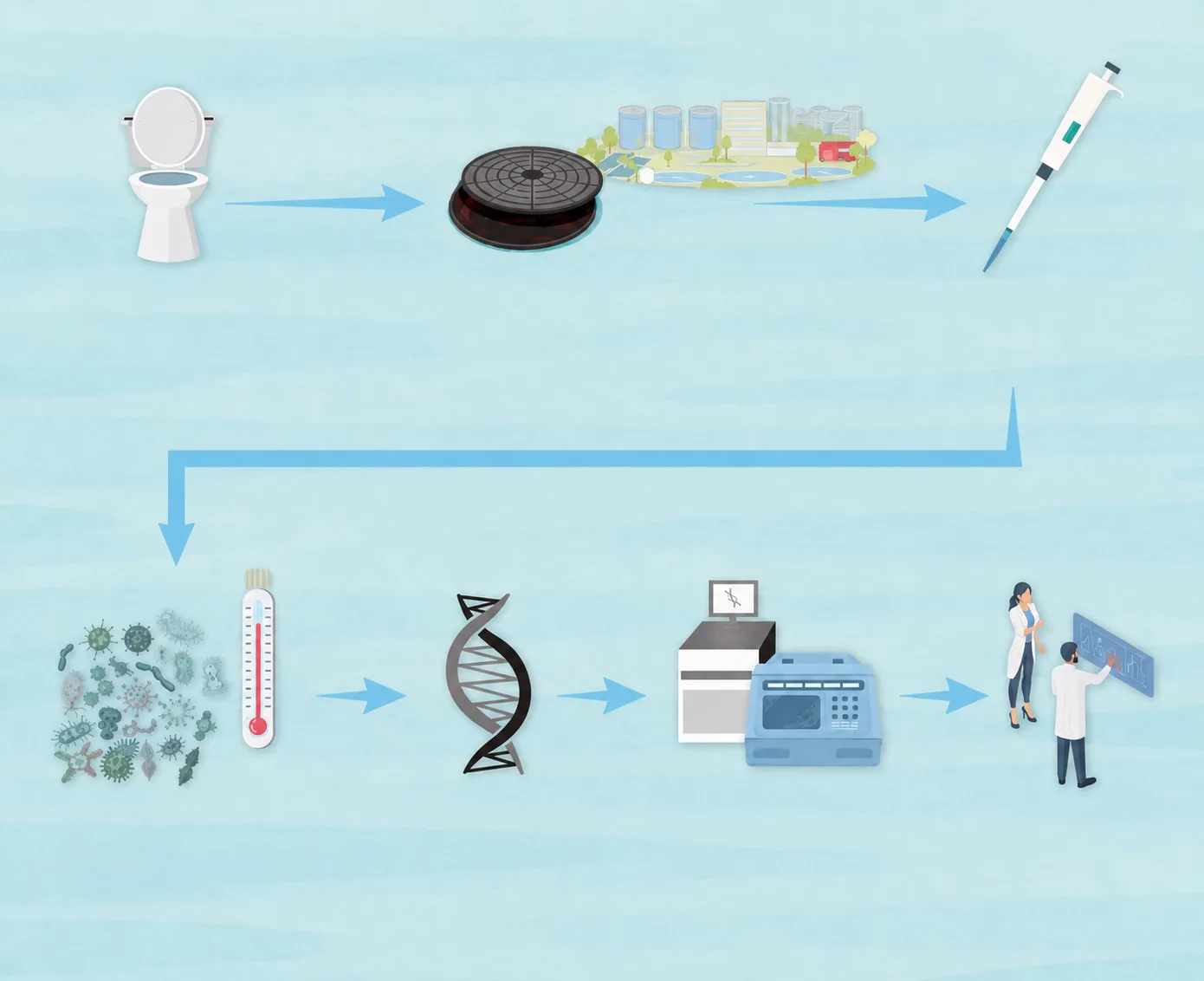
The Increasing Scope and Public Helath Relevance of Waste-Water Surveillance
A conversation between Dr Farah Ishtiaq, evolutionary ecologist, Dr Satyaprakash Pandey , biotechnologist, Dr. Gayatri Saberwal, all three scientists working at the Tata Institute of Genetics and Society and Dr. T. Sundararaman. This conversation provides an introduction to WES, and discusses its priority, feasibility and cost-effectiveness in the Indian context.
Gayatri Saberwal (GS): What exactly is Wastewater and Environmental Surveillance (WES), and why is it so important? What is its relevance to public health?
Farah Ishtiaq (FI): Wastewater surveillance is a powerful tool to understand the community-level infection or pathogen burden of a disease. We cannot physically sample every individual in a population. But if some people are infected, even if they are not identified and tested, as pathogen shedding starts earlier than actual symptoms. WES helps detect presence of the infection in that population. This has more relevance in low- and middle-income countries, or low-resource settings, where not everyone has access to clinical testing. By the term pathogen, I mean any biological agent that causes disease- could be viruses, bacteria or other types of micro-organisms.
By testing wastewater, we can understand the prevalence of a disease, identify which pathogens we need to monitor, and pinpoint infection hotspots. Based on that data, public health officials can design and direct specific public health strategies—whether that involves distributing vaccines, or containment measures, or improving clinical disease surveillance or directing research and development.
Beyond just looking at the overall viral or pathogen load, we can also overlay this with genomic surveillance. This allows us to track the genetic diversity of a pathogen and see how it is mutating. Pathogens evolve over time, and this affects the performance of our testing and vaccination strategies. Wastewater surveillance allows us to keep our finger on the pulse of how things are changing at a community level, rather than solely relying on individual human data.
GS: That leads right into my first question. India has had a long-standing polio surveillance system that used wastewater, but the concept really came into public prominence during COVID-19. Could you talk about the scope and scale of its use during the pandemic and how useful it was in handling the situation?
T. Sundararaman (TS): Actually, before we jump into COVID-19, could you start with a brief description of how wastewater surveillance was specifically useful in eradicating polio?
FI: Certainly. One of the primary reasons India was able to eradicate polio is that we didn’t just rely on mass vaccination programs for children under five; we combined vaccination with wastewater surveillance.
When someone is infected with an enteric virus like polio, they excrete it. If you have people in a population shedding those viruses, you can detect traces of it in the sewage. Back in the 1980s, India ran a pilot program in densely populated areas of Bombay to look for the wild poliovirus in wastewater.
It is a highly sensitive and powerful approach. If you know the population catchment size, you can estimate the proportion of infected people. Even if there is just one infected individual in a catchment of 100,000 people, we can detect it. Once you identify traces of the virus, you can mark that specific area as a hotspot and launch targeted vaccination programs in that locality. To this day, we still have over 60 to 70 sites across India being tested on a monthly basis to ensure that no wild poliovirus is circulating.
When the COVID-19 pandemic hit, we applied the same logic. The virus was spreading rapidly, and we had no idea which variants were circulating at the population level because clinical testing wasn’t uniform everywhere. During the Delta wave, especially in places like Bangalore, it was incredibly hard. If we had known a wave was coming, we could have handled the situation much better.
Recognizing this, over 100 countries started doing wastewater surveillance during the peak of the pandemic. It allowed them to track rising viral loads and identify which specific variants were driving those surges. It thus acts as an early warning system. It identifies hotspots and allows authorities time to prepare and respond better.
In Bangalore, we have been running this surveillance for the last five years. We share the data directly with the local government and the municipal corporation, who use it to make public health decisions. Since the pandemic, wastewater surveillance has become a mainstream, complementary public health tool in this city.
GS: I’m aware that wastewater surveillance can monitor not just piped sewage, but also informal systems like open drains. In that sense, it can cover many more localities. Between formal and informal sewage systems, what fraction of sewage is being monitored in a place like Bangalore, and is that typical of our large cities?
FI: Sewage infrastructure in India really varies. In Bangalore, we have about 34 active sewage treatment plants (STPs) which cover roughly 70 to 75% of the population. While that is a large chunk, we still have suburban areas where new apartment buildings have come up in the last 15 years that aren’t part of this centralized system. However, by law, large apartment complexes must now maintain their own STPs. You can target those high-density buildings for surveillance. Even if we aren’t tapping into 100% of the system, monitoring those 34 centralized STPs gives us a good idea of the infection levels across the city.
Other places require different approaches. For example, Trivandrum in Kerala has some STPs in the main city, but the rest of the state largely relies on septic tanks. It’s a challenge, but it’s not impossible. During the peak of COVID, surveillance was successfully done in places with open drains like Dharavi in Mumbai, as well as in Dhaka, Bangladesh, where a large population isn’t connected to a formal sewage system. Once you understand how the population is distributed and where the open drain lines are, you can do “blue line mapping” to identify ideal catchment sites for consistent monitoring. It just requires good groundwork.
GS: What is the current scale of this surveillance, across India?
FI: During the peak of COVID, at least five or six cities were involved. Hyderabad did it for COVID and antimicrobial resistance (AMR). Pune, parts of Gujarat, Mizoram, and Delhi (through Ashoka University) were also conducting surveillance.
However, much of that was project-based. Now that COVID has subsided, most of the funding has dried up, and many cities have stopped. However, Bangalore still has good continuity; we are overlaying data for not just COVID, but influenza viruses and AMR. The Gujarat government is also very interested in this, and the Gujarat Biotechnology Research Centre (GBRC) continues to conduct surveillance across a network of sites, even working on protocols for lumpy skin disease in cattle and avian influenza.
TS: But for the long-standing polio surveillance, you mentioned earlier that there are about 60 centers. How is that organized?
FI: Yes, there are 60-plus sites sampled on a monthly basis specifically to check for the wild poliovirus. This is entirely managed by the Indian Council of Medical Research (ICMR) through their Viral Research and Diagnostic Laboratories (VRDL) network. They collect samples from across the country, which then go to reference labs like the National Institute of Virology (NIV) for testing. Currently, that network is only testing for poliovirus.
GS: Moving away from the big cities, what about difficult rural locations where monitoring might not seem practical—like areas relying entirely on soak pits?
FI: Urban centers are easier to monitor, and rural areas without good sewage networks are definitely a challenge. But again, it’s not impossible. We actually do this work in Devanahalli, a rural belt about 45 minutes from Bangalore. The sewage network there is starkly different, but there are still main sewage lines that run across townships where we can collect samples. Another strategy in rural settings is to collect wastewater directly from local hospitals, since a large portion of the local population goes there for treatment. It gives you a great idea of what infections are prevalent in the community.
GS: What kind of laboratory capacity is required to set up wastewater surveillance? How much infrastructure does a city or state need?
FI: The infrastructure required is highly manageable, especially given how India handled COVID testing. You do not need a fancy lab. All you need is a basic molecular biology lab equipped with a centrifuge and a PCR machine—which we now have in abundance because so many RT-PCR testing centers were established during the pandemic.
Basic testing and quantification can easily be done at the state level, perhaps using a hub-and-spoke model. If you want to take it to the next level—like genomic surveillance—that gets slightly more complex and requires coordinating with larger institutes that have that expertise. It is also very cost-effective because you can pool samples from several sites to save resources while still narrowing down where an infection is coming from.
TS: To get a concrete handle on this: for a city like Bangalore, with a population of about 1.4 crore (14 million), what team size and what kind of equipment are we talking about to run this?
FI: It really depends on how many sites you are surveilling. In Bangalore, we have been monitoring 28 sewage treatment plants on a weekly basis. During the peak of COVID, this was done in near real-time—samples were collected, processed, and screened within 24 hours. So we knew immediately if virus levels were going up or down.
To run an operation at that speed for 28 sites, you need basic PCR equipment and a highly efficient team of about six or seven people, keeping in mind that you always need backup staff available.
GS: One problem is that we are now not just surveilling for polio and covid. We need to test for a large number of pathogens. How are we in terms of technology development for this purpose? Ideally we want diagnostic-panels, by which I mean a single test that diagnoses a whole range of pathogens and multiple features of interest in them. Perhaps, Satya can respond to this question better. Its your work area.
Satyaprakash Pandey (SP): Technology development is clearly moving toward integrated, multiplexed approaches and combining WES with clinical insights.
For example, TIGS has designed multiplex PCR panels to simultaneously detect pathogens such as SARS-CoV-2, influenza, and RSV (a type of respiratory virus) from a single sample. For detecting and studying antimicrobial resistance (AMR), TIGS has worked on panels that detect resistance markers across multiple organisms, helping map resistance patterns in communities rather than relying only on hospital-derived samples.
From a technology standpoint, these panels leverage established PCR platforms, meaning that laboratories do not need entirely new infrastructure. The incremental cost of adding targets to a multiplex panel is relatively small compared to the value of broader detection and faster decision-making. TIGS has also collaborated with Indian manufacturers for enzymes, primers, and consumables, ensuring self-reliance, cost control and supply chain resilience.
A key strength of TIGS’ approach is validation through real-world surveillance. Panels are not only analytically validated in the lab but also tested across diverse field conditions-urban sewage systems, decentralized sanitation setups, and institutional campuses-before deployment.
However operational challenges remain and need to be addresses such as building standardized workflows which go from sample collection to reporting within existing public health systems. This requires coordination between labs, local authorities, and policymakers. This is an area where early-stage handholding and training is important before state or nation-wide deployment.
GS: Do you have any other comments on technology development for WES?
SP: WES is now recognized as a powerful public health tool, but its technology requirements differ significantly from those of clinical diagnostics. TIGS has contributed to advancing WES by developing and validating protocols tailored to complex environmental matrices.
For instance, in COVID-19 wastewater surveillance, TIGS optimized methods for viral concentration, RNA extraction, and quantitative PCR to reliably detect low viral loads in highly variable samples. This highlighted a key challenge: unlike clinical samples (such as nasal swabs), wastewater contains mixed genetic material from multiple organisms, inhibitors, and variable dilution factors. As a result, assays must be specifically designed for robustness and sensitivity in such conditions rather than directly adapted from clinical kits.
TIGS has also explored quantification approaches in WES, enabling estimation of viral load trends across geographies. This quantitative layer is critical—for example, rising viral loads in wastewater from a specific ward can trigger targeted public health interventions even before clinical cases surge.
Another important direction is expanding WES panels beyond known pathogens. TIGS’ work in AMR surveillance has shown that environmental sampling can reveal circulating resistance genes in a community. Building on this, future panels are being conceptualized to include priority pathogens for public health and, zoonotic and emerging pathogens from the outset, providing an early-warning system for potential pandemic outbreaks.
However, scaling WES requires more than technical capability. Industry participation is essential to manufacture standardized kits, navigate regulatory pathways, and distribute solutions at scale. A successful model emphasizes co-development with industry partners to ensure that technologies are not only scientifically sound but also affordable and deployable within national public health programs.
Overall, while the science and early implementations are well established, the next phase for both multiplex diagnostics and WES lies in standardization, scale-up, and integration into routine health systems.
GS: Farah, coming back to you. Thinking about the future and overall preparedness, COVID was the bug of the moment, but what does the infrastructure look like if we need to test for multiple pathogens at once? Could you talk a little bit about multiplexing?
FI: Right now, we are at a stage where we are developing assays and kits that can test for a panel of up to 10 pathogens at once. For example, a single respiratory panel can check for COVID, seasonal influenza, and Respiratory Syncytial Virus (RSV) simultaneously. This kind of multiplexing doesn’t require extra resources or fancy new equipment; it can be done using the same molecular biology infrastructure in just a few tubes.
It only gets slightly more complex if you expand into bacterial pathogens, like tuberculosis (TB), which require more sensitive protocols. Ultimately, you have to categorize your approach: are you doing enteric surveillance, respiratory surveillance, or monitoring vaccine-preventable diseases like measles or Human Papilloma Virus (HPV) infections? The system needs to be nimble. It must be able to monitor everyday endemic diseases, but also be ready to pivot immediately if a pandemic threat—like Ebola—emerges.
TS: From a public health perspective, we have to be a bit careful about priorities here. An outbreak of the flu or a pandemic requires immediate public health action. But for something like HPV, there is no immediate epidemic threat. Do we really need wastewater surveillance for that when we might have other reliable clinical sources?
FI: I agree that it’s a different kind of threat, but the clinical data we currently have for HPV in India is actually very minuscule, and we don’t have it uniformly across the country. Wastewater data is incredibly valuable here because it tells us exactly which genotypes of the virus are prevalent and where.
This could be of considerable value for evaluating vaccination programs. For example, if the government rolls out mass HPV vaccinations for young girls, how do we measure the efficacy of that program five or ten years down the line? We can monitor the wastewater of high school dormitories to see if the viral prevalence is actually dropping. It isn’t an early warning system for an outbreak, but it is an essential tool to generate data on how well our vaccines are working.
GS: Also, women’s health often takes a backseat. A woman might have discomfort or other symptoms but choose not to go to the hospital. There are huge socioeconomic disparities there. Could wastewater surveillance act as a broad public health screening tool to trace active cases and identify which localities need health camps?
FI: Absolutely. Affluent populations go to the hospital and get screened, but in rural areas or slums, awareness and access are very low. I’ve spoken to many doctors who say it is very difficult to get women to attend screening camps, and when they do, the detection rate might only be 1% out of 1,000 women screened.
If you conduct wastewater surveillance in those specific pockets, you know exactly what is circulating. Doctors can then strategically target their health camps to areas with known prevalence, making the whole process much more efficient.
The key takeaway is that the aim of the program dictates its design. Not everything is an early warning system. COVID or influenza requires weekly sampling for an early warning, whereas tracking HPV for vaccine efficacy might only require six-monthly sampling. That distinction directly impacts the cost and scale of the program.
GS: That brings up the logistics on the ground. Where do we need to take the main samples, and at what approximate frequency? Do we need to engage with public health officers or municipalities to get this done?
FI: Everything starts with defining your goal. Once you know which pathogens you are surveilling, you have to do the groundwork. You look at the availability of sewage treatment plants or do “blue line mapping” to locate informal open drains.
This is where you absolutely must involve the municipal corporations—like the BBMP (city council) and BWSSB (water board) in Bangalore—as well as local community leaders. What happens in the laboratory is important, but understanding how the water actually flows through an area is the backbone of the entire operation.
You also need community buy-in. If you have ten open drain sites and your team is showing up every week to collect water, the local residents need to know why you are there so they aren’t taken off guard. To me, this is what “One Health” really means. It’s not just about animal and human health; it’s about scientists translating their work for the stakeholders on the ground to build trust, ensure safety, and make the data actionable.
GS: I imagine that wastewater surveillance is largely used for the “pathogen of the day,” like polio or COVID-19. But generally speaking, there are so many things we need to monitor. We have common illnesses like typhoid, hepatitis, and influenza. There are about 200 known zoonotic diseases that could cause an epidemic. There is the threat of deliberate pathogen release. Plus, beyond infectious agents, there are drugs, industrial chemicals, heavy metals, and antimicrobial resistance (AMR) in our environment. From our discussion so far, we know that it is technically possible to have parallel surveillance for a large number of organisms. But that has a huge burden of financial and human resources. It could drain a country’s entire health budget?
FI: That is a very good point. Despite wastewater surveillance being cost-effective, testing for an endless number of pathogens across many sites becomes expensive. It really boils down to identifying the specific goal of your program before you even begin. I recommend a tiered approach.
The first tier addresses high-priority, active pandemics in the population—like COVID-19 and polio. We can also combine this with AMR tracking, which is crucial because India lacks comprehensive data on antimicrobial resistance despite antibiotics being widely available.
The second tier focuses on long-term public health programs. This involves tracking gastroenteric infections (like Hepatitis A and E), respiratory illnesses, and even measles. Even where vaccination is available, outbreaks can happen in un-vaccinated pockets, and wastewater can help us spot them.
The third tier is pandemic preparedness—looking for “Pathogen X” or novel pathogens.
GS: When it comes to novel pathogens like Ebola or Nipah virus, are we currently testing for those in wastewater?
FI: People often ask if we have seen Ebola or Nipah in our wastewater. Fortunately, we have not, but there is a very practical reason for that: you need a critical mass of infected people in a population for a pathogen to show up in the main sewage system. Fevers like Nipah are often very localized in places like Kerala or West Bengal; they aren’t common, widespread infections.
This is where you need a different kind of surveillance. If you know an infection hotspot where human-wildlife interaction occurs—for example, areas where people consume toddy or fruits bitten by bats—you have to do targeted surveillance in those specific pockets during the known high-risk seasons. A virus like Nipah won’t shed heavily into the main urban sewage network unless a lot of people are already hospitalized. So, for things like Ebola and Nipah, localized clinical surveillance and strategic swabbing are much more effective. However, for urban settings, there are companies now developing broad viral panels that can screen for thousands of viruses at once, which helps us keep an eye on emerging threats.
GS: Since you mentioned hospitalizations, would you argue that the effluent of every hospital should be monitored?
FI: Yes, hospitals are fantastic locations to understand the community load. Because people showing clinical symptoms come there to get tested or hospitalized, the hospital’s wastewater acts like a pooled sample of sick individuals.
We see a strong correlation between hospital data and overall city data for things like COVID, influenza, and HPV genotypes. However, because socioeconomic factors dictate who can actually access a hospital, the data in small, rural pockets will vary. Regardless, hospitals—along with airports—are highly strategic sites that act as early triggers when infection patterns begin to change.
GS: Has there been any cost-effectiveness analysis comparing the expenditure on wastewater surveillance to the money it saves by acting as an early warning system?
FI: Yes, there is a lot of literature on that, especially from the COVID-19 pandemic. We actually ran these numbers for Bangalore during the Omicron wave in January 2022.
When you compare the cost of conducting 100,000 individual clinical tests in a city at a given time versus the cost of running wastewater surveillance for that same location, wastewater is vastly cheaper. Today, even though mass clinical testing has stopped, we continue to generate robust data through wastewater. Ultimately, you don’t need to max out both systems. A highly cost-effective strategy is to maintain a few clinical “sentinel sites” while using wastewater surveillance broadly to monitor the larger population.
GS: Shifting gears to the societal side: how does wastewater surveillance interface with the public? You mentioned the importance of engaging community leaders to build trust. Besides dispelling rumors and anxiety, what else can the public do to help—or hinder—effective surveillance?
FI: Involving the community from day one is absolutely crucial for any surveillance program. You cannot just collect data for months or years and only inform the community after the fact. We have to proactively share information. Scientists are often blamed for generating great data but failing to communicate it—sometimes due to what you might call “technocrat arrogance.”
It requires skill to translate scientific work into a digestible, non-technical language that people understand. For example, during our dengue mosquito surveillance, people often ask why we are setting up traps. When we pause and clearly explain the purpose and how it helps control dengue, it completely shifts their perspective to positivity. They become invested. Even engineers at the sewage treatment plants regularly ask us for simple reports on what we are finding in the water! If you communicate well and explain the “why,” the community becomes your partner.
GS: Speaking of sharing data, what is your opinion on public dashboards? I know the Pune Knowledge Cluster had a COVID dashboard, and ARTPARK currently has an active one for dengue in Karnataka. Such data is always anonymised and in aggregated form. But is there a risk that real-time public dashboards might create panic when people see spikes?
FI: We actually ran a dashboard for Bangalore during the pandemic that combined data from both sewage treatment plants and open drains, and we posted weekly updates on social media to keep people informed.
Whether a dashboard creates panic entirely depends on how the information is conveyed. If you just announce that “viral load is up,” it might scare people. But if you present it as actionable information, it is empowering. Dashboards are incredibly important because they show people where the real-time hotspots are, allowing them to take immediate precautions. With dengue, for example, if people can see their neighborhood is a hotspot, they know to be extra careful about clearing stagnant water around their homes to keep the mosquito population in control.
GS: Looking globally, WHO has created the International Pathogen Surveillance Network (IPSN)—a consortium of about 350 organizations across 100 countries. However, looking at their directory, India seems underrepresented, with only about three or four institutions listed. What is your take on our global integration?
FI: First, I suspect the directory you looked at might not be fully updated, as more Indian institutions are getting involved.
More importantly, the mandate of the IPSN is very specific. Their goal is to generate funding and promote wastewater and genomic surveillance in low-resource settings. They aim to combine expertise from around the world to generate data in regions where we currently have blind spots. It is a highly active knowledge-sharing platform where scientists have live discussion boards to collaborate, develop standardized global protocols, and share best practices. (https://www.youtube.com/watch?v=kXjxsho6GNo)
GS: Looking internationally, are there networks, countries, or organizations that conduct wastewater surveillance and share their data prominently? Does any effort stand out for its thoroughness?
FI: In the US, there is a very prominent private effort called WastewaterSCAN. It generates data for counties across the country, maintains a public dashboard, and posts weekly updates on social media. It tracks things like RSV, and when mpox emerged, it expanded its surveillance to cover that. Recently, it has also been tracking avian influenza. However, this is largely a private effort, not funded through the CDC.
TS: But what about at a national, government level? Are there European countries that have kept this going at scale beyond just COVID and polio?
FI: Yes, Switzerland is doing a great job; they actively monitor about 110 sewage treatment plants. Several countries in Africa have also initiated programs—South Africa, for example, is using it to track measles and other pathogens of interest. In the UK, the University of Bath has a Centre for Excellence for Water-Based Early-Warning Systems, doing pilot work to figure out long-term sustainability models.
Interestingly, in Europe, wastewater surveillance was being done long before COVID, to monitor illicit drug use. They wanted to understand drug usage patterns in prisons and across cities. During the pandemic, they pivoted to COVID, but now they have returned to their original mandate through a European consortium called Sewage Analysis Core Group Europe (SCORE). For instance, in London, they used wastewater to see how the use of drugs like ecstasy spiked over the weekend and dropped off by Monday.
TS: That intersection with illicit drugs is highly relevant to India. We are seeing rising substance abuse in many states but we have very little quantifiable data. Is there scope to use wastewater surveillance for this?
FI: It can certainly be done, but it is incredibly expensive. To find trace amounts of drugs or antibiotics that have been heavily diluted by the majority of non-users, you need highly sensitive methodologies like LC-MS (Liquid Chromatography-Mass Spectrometry). To give you an idea, testing a single sample just for antibiotics costs about 4,000 rupees. The more compounds you add to your testing panel, the more the cost increases.
GS: That raises an important point. Is there scope for an R&D project in India focused on frugal innovation for this? Here, to roll anything out on a large scale we have to bring down the cost of detection.
FI: Absolutely, we have to find ways to minimize costs to make it work in our context. I actually did a four-month pilot study tracking 18 different antibiotics in Bangalore. Global studies show a direct correlation between the presence of antibiotics in wastewater and antimicrobial resistance genes (ARGs)—which are what trigger resistance in multiple pathogens.
While you can detect these antibiotics, they decompose very quickly and the dilution factor at a city level is massive, meaning that the signal often gets lost. My takeaway is that for tracking things like antibiotics or illicit drugs, the surveillance needs to happen at a very localized level—like a specific hospital or prison, before it dilutes into the main city sewage.
GS: Let’s talk about the “One Health” approach and zoonotic diseases. We know that pathogens can jump from animals to humans via farm animals, wet markets, wildlife trade, or migratory birds. India has vast geographical and biological diversity, and humans are increasingly encroaching on forest lands, bringing us closer to animal habitats.
There are about 200 known zoonotic diseases that could potentially jump to humans. Catching these jumps is incredibly difficult because they are rare, and clinicians might not even be looking for them. For example, during the Nipah outbreak in Kerala, the first case was caught only because an exceptionally alert doctor recognized it from his reading, not because there was active public health surveillance. Given the hundreds of candidate pathogens and so many routes of transmission, how do we systematically catch these spillovers?
FI: You bring up a great point about clinical awareness, but from an ecologist’s perspective, I believe the answer lies in understanding the environmental interactions between wildlife and pathogens. Rather than waiting for a clinical case, we need to look at where outbreaks have historically happened and establish a network of sites that are surveilled year-round.
Take Nipah, for example. We know where past outbreaks have occurred, and we understand the drivers—the spillover usually happens from fruit-eating bats to humans or domestic animals like pigs. With the ongoing changes in land use bringing people into direct contact with bat colonies, we can proactively collect fecal samples or test shared water sources near pig farms and bat habitats. By testing the environment, we can detect the viral shedding before a massive human outbreak occurs.
GS: Does this same environmental approach work for other major threats, like avian influenza?
FI: Absolutely. In fact, we are currently developing similar environmental protocols for avian influenza because it is a massive problem right now. Currently, by the time we hear about an outbreak, it is usually because birds are already dying and being culled. That is too late.
If you look at the last 20 years of avian influenza data in India, you can clearly identify the hotspots—major poultry farms and specific wetlands. While migratory birds play a role, we also have endemic circulation of the highly pathogenic H5N1 virus. Poultry farms are incredibly dense; you cannot swab tens of thousands of individual birds. But if you run continuous environmental surveillance by testing the fecal runoff under the sheds, you can keep a close tab on the respiratory viruses circulating in the flock.
The same goes for live bird markets in India, where domesticated ducks and chickens are brought together and culled. Our studies show that the water runoff from these specific sites often has a very high prevalence of avian influenza. Monitoring these environmental samples acts as a true early warning system, which is far more effective than just doing minimal swabbing after birds have already died.
GS: That makes sense, but we are still only talking about tracking two or three specific species out of a theoretical list of 200 (plus “Disease X”, where we don’t even know what to look for) candidates. How do we broaden the net?
FI: That is where the broader “One Health” missions of governments come into play. Recently, prominent government institutes in India initiated projects to conduct surveillance around zoos and other high-risk wildlife interfaces across the country. The goal is to establish a baseline understanding of exactly which zoonotic pathogens are currently prevalent in the Indian context.
Sporadic efforts are being made. But the biggest challenge ahead of us is translating that data into a concrete, nationwide zoonotic surveillance plan. We ultimately have to answer the hardest logistical questions: exactly what pathogens should we monitor, which specific sites should we test, and at what frequency?
TS: I want to bring up the Pandemic Treaty and its articles on the “One Health” approach. The treaty places a massive emphasis on low and middle income countries strengthening surveillance, supported by World Bank financing- and even this is not a committment. However, critics point out that there is little financial commitment for actual response. Developing countries already have so many competing priorities and struggle just to manage clinical surveillance effectively. If funding gets poured into massive environmental surveillance expansion, do we even have the capacity or resources? Should we limit the scope of wastewater surveillance initially and only expand it incrementally?
FI: We have two excellent examples in India—polio and COVID-19—where wastewater surveillance undeniably helped the country. The value is proven. The real question is where and how it should be implemented.
It requires a tiered approach. At the national level, India could define a core baseline of pathogen surveillance that should be done everywhere. But beyond that, priorities must be defined at the state or community level. The surveillance priorities for a major tech hub like Bangalore will be vastly different from a hilly, geographically complex state like Meghalaya.
TS: A related concern is that the rollout of these programs might get defined by the research tools we already have, rather than our actual public health needs. Research often has its own logic, and sometimes tools go in search of needs, rather than the other way around.
FI: Absolutely. Right now, our testing targets are heavily based on a combined list of ICMR and WHO priorities, which focus largely on pandemic-potential and vaccine-preventable diseases.
But if someone asked me to establish a wastewater surveillance program in Northeast India, I would take a different approach. I would first figure out the highly prevalent local pathogens and tailor the research and development to that specific region’s needs. For example, African Swine Fever isn’t a major issue in most of India, but it causes frequent outbreaks in the Northeast. Researchers are now developing environmental surveillance assays specifically for those pockets. The system has to be nimble and tailored to actual local needs.
GS: So, rather than spending all our resources looking for a “black swan” event, it might be much more effective to surveil for known diseases that are on the cusp of becoming bigger problems.
FI: Yes, exactly. Many of the pathogens on our lists are already ongoing problems in various pockets of India. Take TB, for example. If we can use wastewater surveillance to pinpoint exactly where highly resistant TB strains are circulating, and combine that with our clinical data, it becomes an incredibly powerful, complementary public health tool.
Contact details of Dr Farah Ishtiaq and Dr Satyaprakash Pandey are given along with their bio-sketch further below.
Note: This is the 37th conversation in the series. Readers can enter into the conversation by providing their feedback at the end of this article on the website where it is posted, or on any of the social media platforms where it is circulated.
To access the earlier conversations and other curated information on health policy and health systems strengthening please visit the website: https://rthresources.in/ or https://rthresources.in/conversations-on-health-policy/ For bio-sketch of Dr. Gayatri Saberwal and Dr. T. Sundararaman, access the About Us– page.
Dr. Farah Ishtiaq
farah.ishtiaq@tigs.res.in Dr Farah Ishtiaq is an evolutionary ecologist interested in ecology and the evolution of emerging infectious diseases. Her research experience in disease ecology is drawn from studies on the phylogeography of avian malaria parasites in remote Pacific Islands, and of a highly pathogenic avian influenza virus in Mongolia. As a recipient of a Wellcome Trust/DBT India Alliance Intermediate Fellowship, she established a research programme leading a team undertaking research on the epidemiology of avian malaria and spread of disease in high altitude malaria-free zones in the face of climate change. In 2019, Dr Ishtiaq joined Tata Institute for Genetics and Society to lead the field ecology and population genomics of key mosquito species involved in malaria and dengue transmission in India. Additionly, during the peak of the COVID-19 pandemic, in a multi-stakeholder partnership, she established the wastewater-based epidemiology of SARS-CoV-2 and other infectious agents in and around Bengaluru city. She has been part of several working groups on environmental surveillance and One Health, including a wastewater working research group with the Bill & Melinda Gates Foundation. She also co-leads the One Health Consortium Bengaluru City, Bengaluru Science and Technology Cluster (BeST), approved by the PSA office, Govt. of India.
Dr. Satyaprakash Pandey
satyaprakash.pandey@tigs.res.in
Satya did his PhD at CSIR-Institute of Genomics and Integrative Biology, New Delhi, in the field of RNA biology in 2016. After postdoctoral work in Germany, Netherlands and India, he moved to industry and joined Tata Medical and Diagnostics Limited and worked extensively on developing diagnostic assays for Covid, respiratory viruses, HPV, HBV, HCV, HIV and TB. He joined the Tata Institute for Genetics and Society (TIGS) in late 2023 as Technical Implementation Lead. In this role, his focus is on translating advanced genetic and molecular technologies into practical, deployable solutions. His role bridges scientific research and real-world application — managing technology validation, optimization, and scale-up for public health systems and programs. He works closely with multidisciplinary teams, industry partners, and research collaborators to ensure smooth technology transfer, regulatory compliance, and impactful implementation aligned with TIGS’s mission to advance genetic science for societal benefit.
