


A conversation on: How can states organise Public Financing to support UHC and Right to Health Care?
Background: A number of state governments have seriously considered adopting a Right to Healthcare Act. For reasons of both federalism and decentralisation, a state-level act has real advantages over a central one. But the central question is whether states have the fiscal space to make such a commitment — or, put differently, at what level and methods of public financing is a state genuinely ready for such an act? In this conversation with Dr Gautam Chakraborty, one of the pioneering team of experts on the NHSRC team, who helped develop the financing approaches for the National Rural Health Mission, and Dr. T. Sundararaman (TS) explore not only the question of how much funds is required , but how best should central funds be routed to states, and how it can be deployed efficiently to support this direction of change
TS: Before we get there, a quick overview of public financing. The National Health Policy called for a largely tax-based public financing system in which total public health expenditure as a percentage of GDP should reach 2.5% by 2025 — a milestone year we have just crossed. What is the logic behind this target, and where do we stand?
Gautam: Total health expenditure in India — government, private sector, out-of-pocket, everything combined — is estimated at around 5% of GDP. The policy objective was that at least half should be public expenditure, on the understanding that if this threshold were reached, governments could assure a certain Essential Services Package, and that targeted expenditure would align with moving toward that services assurance goal. There are, however, problems with GDP-based targets. The denominator is total GDP, and if it changes, the picture can be misleading even if actual spending moves in the opposite direction. During COVID, when GDP shrank by almost 10–12%, public health expenditure appeared to increase as a proportion — and then fell back as the economy recovered.
As for progress, total public health expenditure by the centre and states combined has not even touched 2%. The central government figure that puts it at 2.1% includes nutrition, water, and sanitation. If only the health sector is counted — including research and Ayush — it is closer to 1.6%. We remain well short of even that half-of-total-health-GDP threshold.
TS: What would that imply in terms of access to services? Does the Right to Healthcare need to be deferred until adequate financing is reached?
Gautam: If we wait for that, we’ll keep waiting. States must begin moving in a direction that leads to the progressive realisation of a right to health care now. For every level of expenditure, the goal should be to maximise the proportion of the population with access, the package of essential services available, and the degree of financial protection offered.
This is not an argument for an insurance-driven UHC approach. India’s insurance model is unlikely to form the basis. Insurance provides no coverage for either ambulatory care or high-end procedures above the insured threshold. It covers only an intermediate range of hospital services — and even here, delivery is so weak that most studies show no significant decrease in out-of-pocket expenditure or catastrophic health spending. People seeking private hospitalisation with insurance cover are still spending more than those using public hospitals. This implies we will have to rely largely on publicly financed, publicly administered provision of services. The question is therefore how to increase available funds and ensure their allocation maximises access to affordable health care — and states can make significant progress on both.
TS: One clarification on the Essential Services Package: with some donors and planners, this risks becoming a back door to selective health care, with all its inefficiencies. In Thailand, for example, all services are included unless specifically excluded — exclusions apply only where an intervention is unsafe, where better cost-effective alternatives exist, or where costs exceed an agreed cost-effectiveness threshold. Only some high-end procedures may be excluded. There is also no limitation on the number of consultations.
Gautam: The word “essential” is used here as in the essential medicines list — every intervention of known therapeutic value, without unnecessary duplication. An alternative framing that better captures the intent is Assured Health Services. What is included in assurance should follow a VED categorisation, where services are divided into Vital, Essential, and Desirable. Vital and Essential services are all included; only Desirable services are open to discussion.
TS: With that shared understanding of the goal, I will come to the main theme of this conversation. I recall that the draft National Health Policy released for discussion in January 2015 took the position that when states achieve a certain threshold of public health expenditure — say 3% of GDP — they could adopt and realise a right to healthcare. Several states have done so: Sikkim, Jammu and Kashmir, Himachal Pradesh, Goa, and Puducherry, to name a few. Many others, like Tamil Nadu, seriously considered a state law consistent with their understanding of federalism and social justice, but stepped back because they were unconvinced that even a modest increase in health expenditure was achievable. Given the commitment to retaining health as a state subject, could you elaborate on the different sources of funding available to state governments to finance access to a set of assured health services consistent with a right to healthcare law?
Gautam: For all public financing, the sources are essentially tax revenues and debt. Of every Rs 100 of public expenditure, Rs 40 is spent by the central government and Rs 60 by state governments. Of that Rs 60, state revenues account for only Rs 35 — about 60% of their total spending. The remaining Rs 25, roughly 40%, comes as fiscal transfers from the centre, primarily in the form of Finance Commission transfers.
Of the 40% that the central government retains, half is given to states as budget transfers through centrally sponsored schemes — and this is separate from Finance Commission transfers. To summarise from the state’s perspective: of every Rs 100 spent, Rs 35 comes from own revenues, Rs 25 from Finance Commission transfers, and Rs 20 from central budget transfers. From the centre’s perspective, of the tax revenue it collects, 41% goes to states as Finance Commission transfers, 20% as budget transfers, and the remainder is spent centrally. I note this relates to total public expenditure — I am using it as a proxy since a precise breakdown for health alone is not available.
TS: What are the relative merits and disadvantages of these different financing routes? I will come to the possibilities of enhancing each of these flows later.
Gautam: The main problem with the budget route is that it fixes budget lines with funds earmarked for specific items, leaving very little leeway for change. This is therefore the least preferred route.
TS: But the National Health Mission made considerable innovation here through its flexi-pools. The initial NHM commitment was to finance whatever it takes to close the gap between the state of public health infrastructure and the norms specified in the Indian Public Health Standards — and for this it structured a range of flexi-pools.
Gautam: The NHM brought in limited flexibilities. States were given a budget envelope within which they could specify requirements — but subject to items and rates in a central framework that grew increasingly rigid over time. In a normal budget transfer there are five levels of budget lines, and one cannot alter spending patterns even at the fifth level. NHM reduced it to four — the sub-minor head level. A small change, but it helped considerably. One could then know the allocation for a specific programme without being bound by how much was spent on venue, travel, or accommodation. But any reallocation between training programmes still required prior approval, resulting in transactional delays, inefficiencies, and significant money going unspent. There were moves to reduce further to a bulk allocation for an activity type or a district, but these did not progress far.
TS: And there are limitations beyond this lack of flexibility. Budget-line transfers with limited flexibility remain the dominant form, and allocations can shift with changing central priorities. States are also required to contribute 40% of NHM budgets they submit for central financing — meaning a large portion of their own revenues is tied to priorities set by the centre.
In summary, fiscal transfers through Finance Commissions appear considerably better for a state pursuing a road map to universal health care.
Gautam: Yes. States should actively seek higher transfers under the Finance Commission route, and in parallel, transfers to special purpose vehicles from dedicated central pools — specifically the health cess and the National Investment Fund. The main advantage of FC transfers is that the funds are completely untied: states decide whether to direct them to health, electricity, subsidies, or anything else. The limitation is that most FC transfers fall under revenue expenditure, which means they cannot be used to create capital assets.
When we worked at NHSRC on the 13th Finance Commission, an important principle introduced was equalisation grants for health and education — bridge financing for states not achieving required health and education outcomes. This was sector-specific but untied, and a promising approach. It persisted into the 14th Finance Commission.
The 15th Finance Commission moved away from this model. It stipulated that 50% of transfers had to flow through municipal bodies along specified budget lines and many of these detailed budget items and quantum of outputs and funds specified under each did not match changing requirements. Some important budget items that need to go along could be missing. Most states could not operationalise this because municipalities lacked the governance structures to absorb and spend those funds. When central unit cost norms are applied for HR, construction per square foot, drugs, and IEC, states find them unworkable given local variation. In a country of India’s diversity, a single centrally-dictated norm cannot function. Flexibility to change was notionally there, but getting the approvals were delayed and often did not come through. If these were only guiding averages, with state-level discretion and transparency, they could have worked. But a budget-line sort of allocation of financial commission allocations was most regressive. Allocations should be in the form of bulk budgets, preferably for the entire sector, with only broad guidelines.
The 16th Finance Commission has taken what looks like a punitive approach to the slow spending observed under the 15th. Rather than understanding the structural difficulties, only 80% of funds are assured; the remaining 20% is conditional — states must meet requirements such as fiscal deficit below 3%, no non-budget external borrowings, and closure of loss-making PSUs. Of the assured 80%, half must be spent through municipal bodies and only on water, sanitation, and solid waste. Primary health care is not even included. There is no sector-specific allocation, despite states being entitled to a share of the health and education cess as a proportion of central tax revenues. The Commission recommends that states allocate 8% of their budget to health, but this is a recommendation, not a transfer condition — and the current design actively undermines reaching that target.
To summarise: Finance Commission transfers plus a fair share of health cess and NIF funds are the primary constitutionally mandated sources for states to fund health and social sectors in a tax-based financing system. FC transfers could have been used creatively to achieve UHC and the right to healthcare in many states already positioned for this transition — this route is easier to enhance and more flexible than increases in central budgetary allocations. Unfortunately, not only have FC transfers declined as a proportion, they are being tied down in ways that are not helpful. On the positive side, decentralisation to local administrative bodies remains essential, and expenditure mechanisms need strengthening before these transfers can deliver full value.
TS: Given these are the two main sources of public financing, what are the mechanisms for improving the efficiency of public expenditure in the health sector? One widely prevailing opinion is that strategic purchasing is the way to go.
Gautam: There is a classic misunderstanding here. Purchasing in the health sector is quite unlike the infrastructure sector. In infrastructure, the asset is visible and fixed, and private capital often co-finances it. In health, it is a contractual arrangement for a set of services where price and specifications are determined upfront. Insurance is the most prevalent form of purchasing — payers reimburse care provided by public or private facilities after the service is used. Insurance works best for health events with low probability and high costs. But most health needs occur with high frequency. Purchasing through insurance for these needs introduces information asymmetry, moral hazard, and overuse of care — and is not the most efficient vehicle for achieving UHC.
TS: This is now widely evidenced by three rounds of NSS surveys. A recent Hindu editorial characterised the situation as “state-funded insurance schemes subsidising private healthcare providers’ access to low-income markets, without enforcing regulated prices.” Whether this can be remedied is the subject of another conversation — but in any case it is not a mechanism for increasing the efficiency of public expenditure. What about strategic purchasing through public-private partnerships?
Gautam: The same problems apply. PPPs work reasonably well for visible, well-specified deliverables — hospital construction, diagnostic infrastructure, and ancillary services like sanitation, security, catering, ambulances, and diagnostics. Of course, if the apparent cost saving comes from employing contractual staff at lower wages and without social security, that is not genuine efficiency. Developed countries would not permit procurement on such terms. When it comes to the purchase of clinical services, however, the track record is one of persistent failure. PPPs for district hospitals and CHCs have been attempted repeatedly and rarely sustain for even three years. We can conclude that PPPs for clinical services are currently not adding to the efficiency of public financing. The National Health Policy 2017 itself clarifies that purchasing shall primarily be from public providers.
TS: Can we then turn to what innovations or mechanisms can help better public financing of public providers?
Gautam: It is useful to think across four types of direct public financing: infrastructure, healthcare services, outcomes-linked financing, and innovation — to which we can add financing for preventive and promotive care. A significant portion of infrastructure financing flows through the Ayushman Bharat Health Infrastructure Management scheme (ABHIM) on capital expenditure budget lines, which allow only two years to book expenditure. Civil works construction, however, takes two to three years on average — longer in difficult terrain — while equipment and drug procurement typically runs nine to ten months. This structural mismatch means major payments due at the completion of construction cannot be honoured, and the money lapses.
This is where a Special Purpose Vehicle helps. An SPV is a separate legal financial entity — structured as a trust, Section 8 company, or private limited company — largely de-linked from norm-based, directive-heavy annual or biennial expenditure cycles. The PMSSY, under which the new AIIMS are being built, takes this route. The strength of an SPV is precisely that it is a separate legal and financial entity that can hold and deploy funds across multi-year timelines.
SPVs are also well-suited for innovation financing, where 80–85% of new products in the development pipeline may fail. There must be a funding cushion to absorb these failures while still generating returns from the 15–20% that succeed and can be scaled. A further advantage is that SPVs can attract funds from development finance institutions, soft loans, innovative ‘development bonds’, CSR, and philanthropy — sources that cannot easily flow directly into government budget lines. SPVs are primarily useful for infrastructure creation, but are also valuable for supporting innovation where line-item budgets simply do not work.
TS: You mentioned bonds. Could you elaborate?
Gautam: Bonds are mostly used for raising infrastructure funds, primarily issued by municipal corporations. Around the year 2000, central government bonds were also issued, but recently it is almost exclusively municipal corporations. The scale remains very limited — only 12 municipal corporations have issued 18 different bonds in total, and some have issued green bonds as well. As a proportion of total municipal finance, bonds account for less than 3%. This route is significantly underutilised. It is not a substitute for tax-financed fiscal transfers, but a meaningful complement for infrastructure financing.
TS: While these are interesting, these other sources make only a small increment. We are back to tax-based financing as the main source. Other than FC and budget routes, are there other sources of central funding that could be made available?
Gautam: Two are particularly important. The first is the Pradhan Mantri Swasthya Suraksha Nidhi (PMSSN) — a non-lapsable reserve fund managed by the Ministry of Health and Family Welfare, created from the proceeds of the health and education cess. There is a strong case for including it within FC recommendations, since it represents taxes collected across states and pooled centrally. The second is the National Investment Fund.
TS: What happens to the health and education cess — the PMSSN?
Gautam: When approved by Parliament, the commitment was that at least 25% of cess collected would be directed to health. Actual allocations have wavered between 20–25%. Education receives around 50% of the funds, and where the remaining 25% goes is somewhat opaque. This health cess now effectively finances the health flagship schemes — PM-JAY, Ayushman Bharat Health and Wellness Centres, and the National Health Mission — through the routine annual budget. States should be demanding that health cess money be allocated along Finance Commission lines rather than being absorbed into central budget programming.
TS: And the National Investment Fund?
Gautam: NIF is an endowment fund created from asset monetisation — proceeds from PSU and government asset sales. The corpus is preserved; only the interest income is available for use. Around 2016–17, approximately 30–40% of NHM and 50% of the earlier RSBY insurance scheme were financed from NIF. Post-COVID, no central health budget line has been financed from NIF in the last two to three years. States should advocate strongly for a non-negotiable minimum annual allocation from NIF interest income for state-specific health schemes. This fund is better protected from budget fluctuations and emergencies — making it a more reliable source than annual appropriations.
Critically, both PMSSN and NIF funds must come over and above Finance Commission transfers — not as a displacement or substitution of existing budget. If they simply replace what would otherwise be central budget allocations, they add no real additionality to the fiscal space available for health.
TS: What about local bodies — city corporations, municipalities, and panchayats? What is their capacity to raise and deploy resources for health?
Gautam: In any tax-revenue-based system, local bodies have very limited fiscal resources — except for the largest city corporations. Yet local self-government has the greatest proximity to communities and to the geographic and demographic databases needed for preventive care and health surveillance: where slums are located, population densities, disease burden patterns. When I was working with primary health care in the HUP (Health of the Urban Poor) Programme, I observed that municipalities like Bhubaneswar and Pune — which allocated meaningful proportions of their budgets to public health and had structural capacity to deliver it — achieved significantly better primary healthcare outcomes by standard indicators such as ANC coverage, immunisation, institutional delivery, and TB and malaria diagnosis. This was in marked contrast to cities like Jaipur, Agra, and Delhi, where municipal corporations were barely involved. Getting local self-government genuinely engaged in primary healthcare is absolutely crucial for outcomes — yet this is precisely where the least budget is available.
Progress requires three parallel tracks: building public health structures within local bodies; ensuring Finance Commission transfers linked to local bodies are applied more flexibly and appropriately; and creating SPVs through which these funds can be deployed and supplemented. There are innovative examples like Healthy City Programmes where industry or diaspora communities can contribute to public health through such channels. However, none of this can be mandated without changes to Municipal Acts. Under the 74th Amendment, public health functions are optional for municipalities. If the Municipal Act does not recognise public health as a municipal function, there will be no dedicated staff, no systems, and no infrastructure to absorb and productively deploy funds. Finance Commission transfers to municipal corporations without these foundational changes will simply not be spent productively.
TS: Going back to mechanisms of financing — we discussed SPVs as a form of bulk financing. Could you also elaborate on Single Nodal Agencies (SNAs), created for better public financial management of National Health Mission (NHM) funding? There are complaints that the SNA system is reducing flexibility and exacerbating rigid line-item financing.
Gautam: This was a very significant reform. SNAs were set up in 2021 for state NHM and NUHM, requiring every facility to have a single nodal account linked to the Public Financial Management System (PFMS). Previously, a state like Rajasthan had around 33,000 separate bank accounts; Assam had over 20,000. In a Public Financial Management (PFM) study we conducted in Assam, we found that 33% of NHM funds were simply sitting idle across those accounts as cash reserves — a buffer against the uncertainty of when the next release would arrive. By rationalising this, unspent balances fell from over 30% to less than 10%.
What SNAs have done is centralise the cash pool: actual money stays at the centre, and each spending unit holds a virtual account. Payments happen through PFMS directly — an accounting entry rather than a physical fund movement. This has released considerable liquidity, improved financial efficiency, and increased the proportion of budget that is actually spent. The downside is that making this work requires micromanagement from the centre and state levels. Local providers lose the flexibility to respond to local needs, and surveillance and compliance monitoring become the dominant dynamic over facilitation — what has been called the panopticon effect. It is a genuine trade-off between efficiency and flexibility.
TS: When it comes to public financing efficiency, one persistent problem is the mismatch between fund allocation and actual requirements between facilities. Some facilities have high patient turnover and a broad service mix; others are underutilised — yet both receive the same resource allocation. How do we build in financing that is responsive to actual requirements and utilisation? And why has this proved so difficult to solve?
Gautam: The core idea of flexible budgeting is that facilities and districts should not be assumed to have the same volume, service mix, or cost. What we worked out at NHSRC was that if a bulk budget is allocated to a district — based on aggregated utilisation from the previous year — and the district is then allowed to distribute funds between facilities, we get better outcomes. When we did the calculation for RCH services modelled around 1,000 deliveries, we found the district actually required less budget than it was receiving — provided that budget was well rationalised. A reduced but more thoughtfully allocated budget can finance exactly what is needed. What you need for this is a district-level fund pool with flexibility to move funds between facilities — exactly the concept at the heart of our flexible budgeting approach. The pool can carry minimal conditionalities to ensure assured supply of mandated services, and can be calculated on a per capita basis weighted for difficulty factors and burden of disease.
TS: This is essentially what Thailand does. The budget allocation goes to a district and is then allocated by the district to different primary and secondary health centres and activities. The budget has three main pools: preventive and promotive care, outpatient care, and inpatient care. The first two are per capita allocations, weighted for children below five, the elderly, and patients registered with diabetes, HIV, and certain other conditions. Inpatient budgets are based on the volume and mix of cases from the previous year — aggregate activity-based funding, paid in two instalments over the year. Since over 95% of such district units are fully publicly owned, Thailand has developed a highly responsive and efficient model of public health financing. It is often described as an insurance mechanism, which is not technically wrong. But given the profound difference between how insurance operates in India and in Thailand, it is better understood as a model of public health financing that India could meaningfully adapt. The Thai NHSO Act also makes it mandatory for the government to reimburse at cost all healthcare provided under this scheme.
Gautam: The critical points are that what is being financed is a district pool, and that it is a bulk budget — not a line-item allocation. The method of estimating requirements can vary. I prefer to call it “bulk budget allocation” rather than “global budget payment,” which creates confusion with international financing terminology.
TS: But what revenue stream can be used for such payments?
Gautam: Ideally, Finance Commission transfers — since in principle they are not line-item based. Integrating line-item budgets would be very complicated and would create audit problems around non-compliance with central guidelines. FC transfers would need supplementing with additional state tax revenue and, to a lesser extent, health bonds — including green health bonds. External aid and borrowings could also be a source for many states.
TS: We have discussed mechanisms for financing infrastructure, innovation, and service delivery. The financing approach just described assures that essential services are provided and paid for. But you had also referred to outcome-based budgets.
Gautam: There is a growing argument that when it comes to social sector expenditure, some portion should shift from input-based to outcome-linked funding. Most expenditure will remain input-based, but targeted incentives tied to outcomes can yield better results and get there faster. Rather than breaking an immunisation budget into component activity lines each with a separate allocation, the idea is simply to allocate a sum for achieving 100% immunisation coverage.
TS: A word of caution. Despite considerable enthusiasm for performance-based payments, results-based financing, and outcome-linked mechanisms, and despite the many experiments I have encountered, I have seen very few — if any — sustained successes, even in Thailand. The ideological underpinning of pay-for-performance is that public service providers lack incentive to perform above a bare minimum. But there are many implementation problems: outcome measurement by service providers is subject to overreporting; independent measurement at scale is prohibitively expensive; indicator sets become complex and reporting burdens deter participation; there is a persistent gap between who receives the incentive and who is accountable; and under-performers may require greater, not less, fund allocation. My concern is the stark contrast between the attention lavished on performance-based financing and the neglect of requirement-based, responsive funding — which is the urgent operational need.
Gautam: To be clear, I am not advocating performance-based financing, which is process oriented. Outcome-based funding is a distinct concept focusing on quantified and verifiable results, not processes. It should be defined by very few indicators and should target niche opportunities where incremental investment can make a measurable difference — specific geographic pockets, population sub-groups, or special programmes. A clear example comes from Madhya Pradesh: TB patients who do not gain 6–8 kg despite completing treatment face a 30% probability of dying and a 60% probability of TB recurrence. Outcome payments were designed for patients not only completing treatment but achieving that weight gain — tracked and visible on the Nikshay portal. The supervising NGO received the monetary incentive without displacing spending on any other aspect of patient care or the NGO’s basic expenses. The spend on such incentives is small, but where it works, it significantly improves outcomes on already-sunk investment.
TS: Much of our conversation has been about how states can claim more resources from the centre and make better use of combined resources. But what about expanding the fiscal space itself — growing the overall pie, both at the central and state levels?
Gautam: If overall central tax revenue collection increases, the 41% FC share going to states also increases — but only provided that health and education cess proceeds and NIF allocations are treated on par with other taxes. The challenge with sin taxes on alcohol and tobacco, or other earmarked taxes, is that they advance the Right to Health agenda only if genuinely passed on to states. Government expenditure as a percentage of GDP has risen from around 13% to 18% or higher, but this remains well below developed-country levels. It needs to rise further.
TS: I would add a note of caution: if increased tax revenue comes through bonds or earmarked taxes borne broadly by the population, that would be regressive. If it comes through corporate taxes, wealth taxes, or inheritance taxes, it would be progressive — but that requires a different kind of political will.
Gautam: The scope for states to generate their own revenues is genuinely limited. The district mineral fund is one possibility, but tweaking the rules requires central approval. Some states have considered bonds, tourism taxes, or leasing hospital space for commercial use — but the scale of such measures is very limited. States also borrow from the World Bank, ADB, and others, and there have been suggestions about diverting loan repayments toward health asset creation. But all of these represent modest increments rather than transformative additions to the overall fiscal space.
TS: Some states are taking loans to strengthen the private sector through Medi-cities and similar projects, while resisting borrowings for primary health care. It is clearly a longer political battle. And we should not assume that most states or regional parties are any more committed to the right to health than the centre is — despite strong rhetoric around federalism and the welfare state. So, a final question: given declining allocations in central and state health budgets, and the constraints being placed on Finance Commission transfers, is this the right moment to advocate for a right to healthcare — or should governments wait for greater fiscal space? We argued in an earlier conversation that a right to healthcare itself adds efficiency at every level of financial allocation. What is your view?
Gautam: I really do not see this as an either-or question, nor as a sequence. The right to health is not contingent on reaching a particular monetary threshold. There will be constraints on the package of assured services, but current fiscal space is sufficient to deliver all vital and essential services. Two decades ago, it might have been different — but many states can now leverage available fiscal space and systems readiness to begin the journey toward the right to health across all three dimensions of UHC.
The immediate actionable is focusing on the efficiency of spend. There is a valid argument that publicly delivered services, without the overhead of insurance intermediation or strategic purchasing mechanisms, achieve greater economies of scale — lower unit costs, wider coverage, and access to a broader range of services. But that assumes a governance structure capable of guaranteeing that efficiency. The translation of any additional fund into genuinely free and accessible services requires an efficient public health structure that can actually deliver them. Like there is a market failure, there is also governance challenges — and we need to tackle both.
(We acknowledge the inputs from a few mid-level officers to confirm some of the details.)
Note: This is the 33rd conversation in the series. Readers can enter into the conversation by providing their feedback at the end of this article on the website where it is posted, or on any of the social media platforms where it is circulated. If you would like to contact Dr. Gautam Chakraborty directly you could email to gchaks72@hotmail.com
To access the earlier conversations and other curated information on health policy and health systems strengthening please visit the website : https://rthresources.in/ or https://rthresources.in/conversations-on-health-policy/
About Dr. Gautam Chakraborty
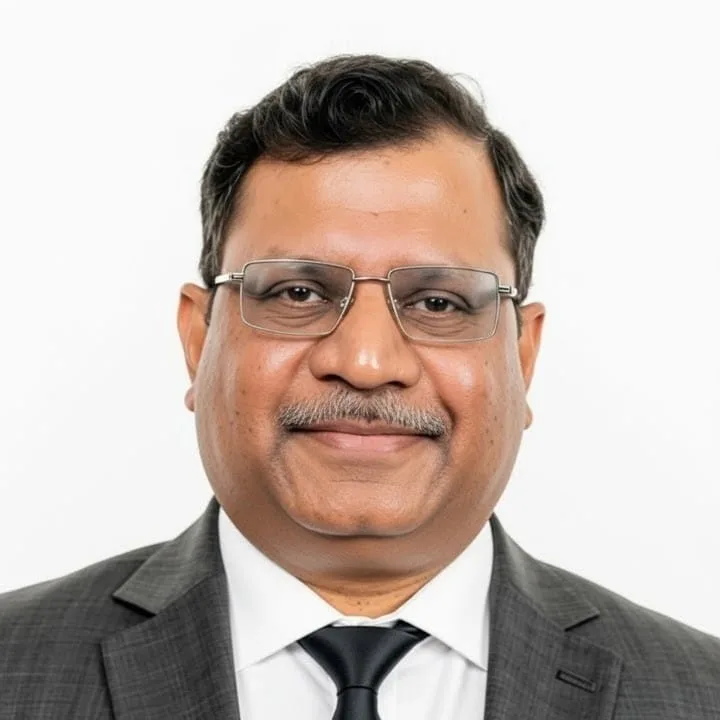
Dr. Gautam Chakraborty is a health financing specialist with nearly three decades of experience advancing innovative financing solutions for health systems in India. His work in public financing began as part of the initial leadership team at the National Health Systems Resource Centre (NHSRC), New Delhi, where he provided technical expertise to the National Health Mission in mechanisms of public financing, government expenditure tracking, and fiscal policy. His public financial management work with Assam’s NHM budget helped raise utilisation from 75% to over 90% in two years. During nine years at USAID, he architected the SAMRIDH blended finance facility to support healthcare innovations and designed the Utkrisht Impact Bond — USAID’s first Development Impact Bond. He has published on blended finance, pay-for-results models, and health systems strengthening. He holds a Doctor of Business Administration from the Swiss School of Business and Management, Geneva and an MBA in Finance from MDS University, Ajmer.
