

Ensuring self-reliance and universal access to biologics- Part I
Background
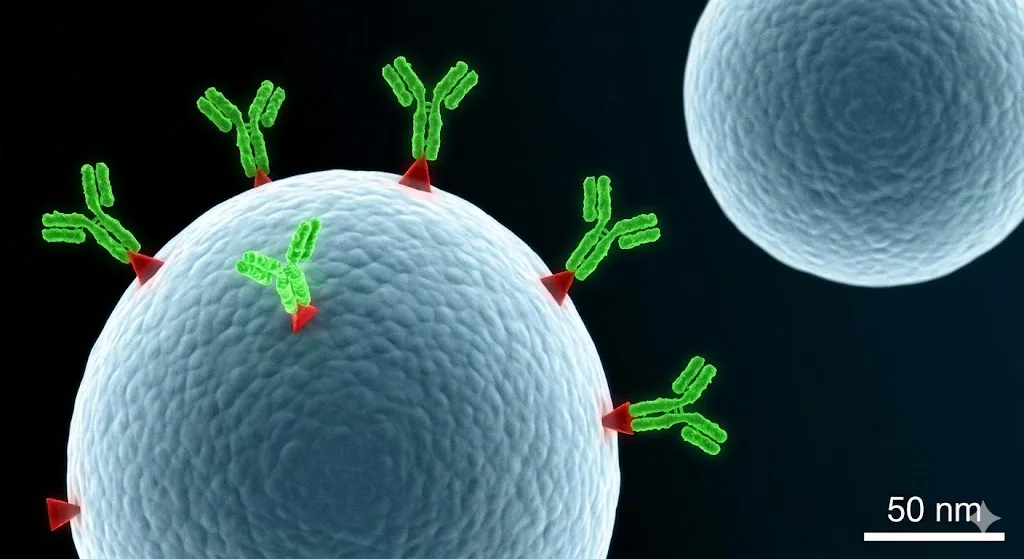
This conversation is about universal access to biologics, for India, and indeed for all developing countries. Most of the medicines that we take are ‘small molecule drugs’. They have fixed structures, and are produced by chemical reactions in a test tube, so to speak. Biologics, in contrast, are usually proteins which are enormously bigger molecules. Insulin is a good example. Proteins need to be folded correctly in order to function, and various conditions can cause them to misfold or aggregate. Also, because proteins are produced in living cells, and not in a test tube, the cells may modify the protein.
When a new drug is introduced into the market, the “originator company” has patent rights, meaning the exclusive right to manufacture that drug. This monopoly allows the manufacturer to sell the medicines at a very high price. Patents have a time-period, and after this term ‘expires’ the drug goes ‘off patent’, which means that now any company can manufacture it as a ‘generic drug’ (which is identical to the originator’s drug) without permission or the need to pay a royalty. India is a significant player in the global pharma industry, and most of our pharma companies manufacture generics. The competition between these companies helps to radically bring down the price of the generic drug. Biologics, too, experience a similar life cycle. However, for biologics the generic equivalent is called a biosimilar. Here, too, the price will drop dramatically once a biosimilar is on the market. But due to a number of barriers, the transition that India made to become a leader in generics has not fully taken place for biosimilars. But it could happen.
Mr. Lalith Kishore is based at C-CAMP (the Centre for Cellular and Molecular Platforms), the enterprise incubator for biotechnologies, and leads the ‘Indigenization of diagnostics’ (InDx) programme. He spent over 17 years with GE Healthcare, responsible for growing the business. During the COVID-19 pandemic, he headed the InDx programme, that dramatically brought down the cost of the COVID diagnostic tests. He can be reached at lalithhema@gmail.com.
Dr. Chandrashekaran Siddamadappa is a doctorate in molecular biology, with 22 years’ experience as an entrepreneur in the field. He leads Vipragen Biosciences Pvt Ltd as Founder & Managing Director and has recently founded Glogene. He had founded Enzene Biosciences in 2006, later selling it to Alkem Laboratories. He can be reached at cshekran@gmail.com.
Dr. Gayatri Saberwal is a policy consultant with the Tata Institute for Genetics and Society, Bengaluru. She was professor and Dean (Academics) and did public health policy research at the Institute of Bioinformatics and Applied Biotechnology, from where she retired. She can be reached at gsaberwal@tigs.res.in.
Prof. T. Sundararaman, teaches and works in health policy and health systems strengthening and coordinates the RTH Collective:
Gayatri Saberwal (GS): Lalith, could you give us a brief introduction to biologics? Why have they become so important? Maybe you could give examples of some of the diseases which are treated by biologics?
Lalith Kishore (LK): The biologics revolution is pretty much a follow-on to the generics revolution that unfolded over the past several decades. As far as the small molecule generics story goes, we took the molecules that were coming out of the West—largely from Europe and the US, and in some cases Japan—and then replicated them chemically to create the same products. We had process patents, which meant that the chemical itself was not patented, only the process. And we were experts at reverse engineering. Give us a chemical entity and we could find a way of synthesizing it by a different path. As soon as the patent expired, we would have the generic formulation enter even the regulated markets, like the US and Europe. That is how India became a pharma superpower. We have reached a stage where India is the country with the largest number of US FDA-approved manufacturing sites outside the US. We are a global superpower when it comes to pharma; we are the pharmacy to the world.
When biological drugs started coming out—specifically monoclonal antibodies, which are proteins—it was felt that the same story could be repeated in India with those as well. You have a cell that grows the monoclonal antibody. You amplify (multiply) the cells, purify the antibody, and formulate it as a drug. Typically, what is needed is a simple clone, that is a population of cells (all derived from a single cell that produces a lot of the protein of interest) that become like a factory for that protein.
Generic manufacturers either bought the clones, or made them themselves, or somehow got hold of the clones (that the innovator used). All three have happened, and multiple companies have started making monoclonal antibody drugs. However, the idea is that while chemical replication is exact, biological replication of a monoclonal antibody is more nuanced. It is almost the same, but you cannot say that it is exactly the same with the same confidence that you would if you had a simple molecule produced by a chemical reaction. For instance, if the protein normally is ‘decorated’ with carbohydrate chains, there may be changes in the nature of the decoration during manufacture.
Given this variability, getting approvals for them was a little difficult. However, we have made progress. By 2008, there were at least 16 or so molecules that were off patent that Indian companies were ready to produce. Currently, there are at least 20–25 companies in India that have a set of about 20–30 monoclonal antibodies that they want to launch into regulated markets as biosimilars. Notably, these are most often for serious conditions such as cancer.
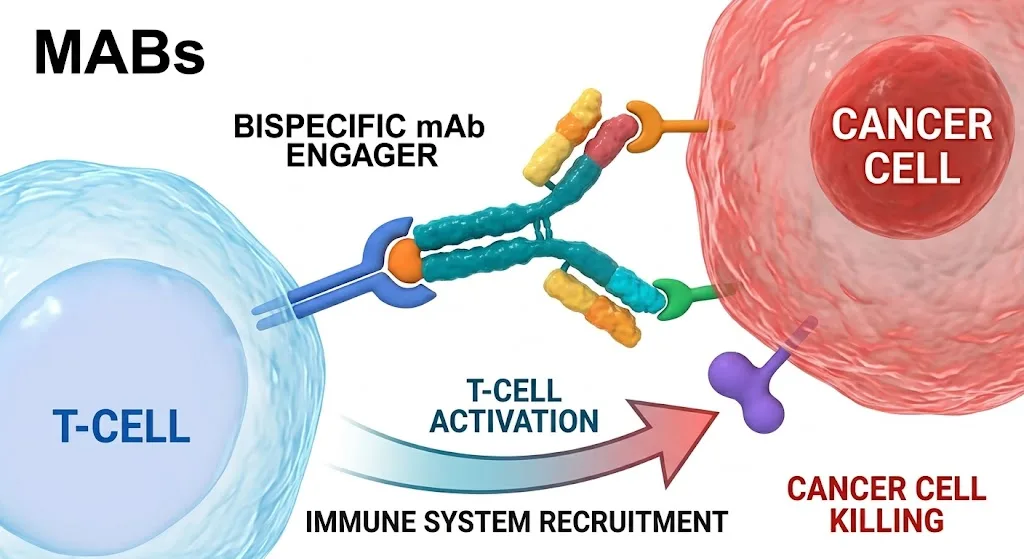
Dr. Chandrashekaran Siddamadappa (CS): To add: Biosimilars range from recombinant peptides and recombinant proteins to, mainly, monoclonal antibodies. And the complexity increases as we move from peptides to smaller proteins and then to monoclonal antibodies (MABs). Even more complex molecules are now available. In terms of disease areas, many newer biologics are concentrated in three areas: autoimmune, oncology, and pain and inflammation. (See the annexure for some essential MAB-biologics, their uses and their prices.) Among existing remedies, insulin, anti-snake venoms, immunoglobulins, blood factors are to be included as biologics. Vaccines are another major category, especially recombinant vaccines.
GS: Let’s focus on the newer biologics. What are the costs for particular drugs, just to give the reader a feel of this?
LK: Let’s take a very popular drug like Avastin, used for various cancers. Today, Avastin from an Indian biosimilar manufacturer could be anywhere between $200 (Rs. 19,000) to about $320 for a 100-milligram dose, whereas the same drug in the US would be anywhere from $1,800 (Rs 1.7 lakh) to $2,500 for the same dose of an innovator molecule. From both the Indian and US perspectives the price has come down significantly thanks to the onslaught of biosimilars. Otherwise, at the start of this cycle, both prices were about ten times higher. So, competition from biosimilars significantly drags down the pricing of innovator drugs as well.
But one of the things that should bother us—and it is very important to point this out—is that Rs. 20,000 or even Rs 2,000 for a 100 mg dose is still not affordable in our context. There is significant scope for reducing the cost even further.
GS: But how? Lalith, you headed the InDx programme, that brought down the cost of diagnostics phenomenally during COVID. Could you tell us a bit about how that was done?
LK: During COVID, the RT-PCR test was being imported even though we had known the technology for 25–30 years. We broke it down into its components: oligonucleotides, dNTPs, reverse transcriptase, Taq polymerase, master mixers and buffers. Even vials, swabs, and viral transport media. We identified sites where these were being manufactured indigenously, though often not at global quality. We worked to bring those products up to standard. In areas where no one was manufacturing them, we encouraged companies in ancillary spaces to start doing so.
Eventually, we had 100% indigenously manufactured kits. Imported kits were being sold at about Rs. 2,750 per test, but by the second wave, within government tenders, the kits were being sold at Rs. 15 per test. That is the kind of downstream effect you can have. I am not saying the numbers will drop as drastically for biologics, but we are barely skimming the surface of how we can reduce costs. Even now, we are confident enough with technology improvements to bring costs down by one quarter, or even less. If we actually wring the system further, we should be able to do far more.
CS: The reality on the ground is that over 93–95% of Indians cannot afford even biosimilars. They are still very expensive. Why? Making them affordable requires interventions in domestic manufacture, in regulation and in distribution. In manufacture, there is a clear-cut need to Indigenise various aspects of the manufacturing of biologics, in steps similar to what Lalith did in InDx for diagnostics. This in itself can increase affordability so that instead of 5–10% of the patients, 30–40% can afford them. But the next major step is in streamlining regulation and removing unnecessary steps, while speeding up the regulatory timelines.
One major change required in the regulatory system is not to insist on clinical trials to approve a biosimilar. That is actually possible now, since the US FDA, has given a clinical trial waiver for biosimilars in the US. Clinical trials would have cost $40–$60 million. The Drugs Controller General of India (DCGI) is coming out with guidelines that are in line with those in the US. I expect that these will be out in one or two months. The draft guidelines are encouraging. However, there are other regulatory barriers to be addressed. For instance, in China, an innovator could go from the clone to GMP (Good Manufacturing Practice) in 4 months. They can do this because there is no red tape at this stage. We need to graduate to that level because it’s basically about speed. If you take two months extra, the costs go up correspondingly.
I give another example: when I started Enzene, I had to get approval from the Review Committee on Genetic Manipulation (RCGM) even for pre-clinical research. Nowhere else in the world, except in India, do you have to take permission just to start a biosimilar project—submitting to Institutional Biosafety Committee (IBSC) and then RCGM just to do your cloning. It took almost a year and a half just to get into pre-clinical work. Now, I am hoping that the new guidelines will do away with all the pre-clinical requirements. This means that if you start a clone today, you can reach the GMP stage within 6–8 months, which is a very good.
GS: And by reaching the GMP stage, you mean ready for manufacturing for the human trials.
CS: That’s right. It is a combination of speedier and better regulation and also of adoption of new platforms. For example, when I started my company Enzene, the clone which I got from Catalent yielded around 1–1.5 grams of protein/litre. Technologies changed. Now, with fed-batch cultures, 10 grams/litre is a reality. That means you have technology platforms which are almost 5–7 times more productive than they were 5–10 years ago. That is a technological improvement which anybody entering biosimilars now is going to take advantage of. Coupled with that, there is something called a continuous perfusion platform, where you can reach 60–70 grams/litre without affecting the quality of the monoclonal antibodies.
If the Government of India wishes to take complete advantage of this, it should support companies getting into these new platform technologies and work with them quickly to help with regulatory and other requirements. Launching these products will increase affordability.
With these new technology platforms, we have estimated that you can bring down the cost from Rs 10–25 lakh to Rs 3–5 lakh. Once affordability increases, even the Indian market becomes massive. If affordability increases and the market reach is 25%–30% of Indian patients, we are talking about a $2–3 billion market. If public facilities procure and supply these to patients, the market is even larger. That is where biosimilars become very attractive for people like us who manufacture biologics.
GS: I would like to push you on one thing: you are saying that we can bring the costs down from Rs 10–25 lakh to Rs 3–5 lakh. What would bring them down even further?
CS: One factor is the technology platforms. We still use the Chinese hamster ovary (CHO) cells from abroad, which means that we still need to pay licensing and royalty fees. Second, and most importantly, almost 95% of the components of the entire process are imported—upstream and downstream accessories, media, protein A, agarose, sucrose, Tangential Flow Filtration (TFF), vials, and fermenters. Everything is imported.
There are companies now working on TFFs, and even storage bags, which are 15%–16% of the manufacturing costs. Media and protein A agarose together contribute roughly 29% of the cost. If we have our own CHO platform and 50% of these materials are made in India, we can bring costs down further. It may take a while because these are regulatory-driven quality accessories, but the ecosystem is moving that way.
LK: It is a trickle-down effect. If you make protein A agarose in India, you could get a 50% cost reduction. But to make agarose, you need agar, which we currently import from China. There are people making it in India, but not yet at the required purity. We need to work with them, improve their quality and source from them. We saw this in the pharma space: once people started making raw materials and machinery domestically, the cost structures completely crumbled and set a new baseline. The intention must be to build the entire ecosystem here.
GS: We were talking of components like vials. I once heard that in a vial of vaccine, what is in the vial is less expensive than the vial itself.
LK: Yes, that’s right.
GS: That is mind-boggling.
LK: I don’t know if you remember the time when people were making CD-ROM discs? The CD-ROM was far cheaper than the case which the CD-ROM came in.
GS: And those were such cheap plastic cases! Amazing.
LK: We do have the ability to manufacture something as simple as vials. I think it’s the regulatory hurdles and the reluctance of people to go through so many regulatory hurdles. Manufacturers think “I’ll just spend the money, buy it from the US or China, face no regulatory hurdles, and then I’ll pass on the cost to my customer.” How should we tackle this? Don’t weaken the regulations. In fact, harmonize them with global regulations. But create a pathway that is faster. When Chandra says ‘Do it in a month’ he is not saying deregulate. He means speed up the process. That’s the key.
CS: It is not just about making biosimilars cheap; the idea is to make them at a quality that is globally accepted. Once you have that, you can have differential pricing. We can bring the cost for an India-specific programme much lower than the rates at which we sell to the US market. Even if they cut clinical trials, insurance companies in the US ensure that costs there remain as high as possible. To summarise, addressing this unmet need for biologics in India requires government support, new technologies, a robust manufacturing ecosystem, and removing regulatory hurdles.
GS: The government does seem seized of some of these issues. In February, as part of its budget announcement, the government announced a Rs 10,000 crore initiative, ‘Biopharma Shakti’, and the goal is to make India a powerhouse in biologics and biosimilars. Do they have a plan on how exactly they are going to use this? Because throwing money at the problem may not work. Is there a plan?
CS: This Rs 10,000 crore is over five years. This could be a game-changing, and very visionary step towards building biologics self-reliance for the country. It has come at the right time, right place. The question is: How are we going to become a powerhouse?
I feel that we need action on several fronts. There is a requirement in terms of innovation in the biologic space, starting from the basic science, which can be done by academics and in other research spaces. This will lead to new drug target identifications, which may yield fruit probably in the next 10 years or so. That will lead to novel biologics from India. That has many other elements, like the approach to financing, the IP regime etc, which is a separate conversation. Here we are focussed on biosimilars, which by definition are existing biological drugs that are off patent.
For existing drugs, one set of required actions relates to generating the immediate technological requirements, including in vitro biology, genome editing, cell engineering etc. And setting up our own India-specific CHO platform. Why can’t we become an innovator for the world? I think companies and academics should sit down together and brainstorm. There are several people, like Dr. Anurag Rathore at IIT-Delhi, who have been in the biologic space for a very long time, and who understand it quite well. And technologies are available. But how do we bring them to India and then indigenise them? I think that is the second stage. And the third stage, the most important thing, is building some kind of manufacturing setup. I think research can be done with a PPP model, but in terms of manufacturing, it should be led by the private industry. That’s what I strongly feel.
LK: I don’t want to burst the bubble here, but Rs 10,000 crore for a 5-year program is limited. When distributed across this time period, it could be spread a little thin. But I think it’s a very good beginning.
CS: But to your question, ‘Do they have a plan’, probably they’re working on it, although I have not seen what is being planned. The government could ask ‘What is it we are going to achieve in five years’ time? What is the first-year plan? What are the immediate requirements? What is it we’re going to address using biologics?’ One could say, ‘Identify 10 or 20 molecules for which on average, people are paying, lets say, Rs 10 lakh. We want to bring it down to Rs 2 lakh. Who’s going to bring in technology, who’s going to bring in the other things, who’s going to do the manufacturing, who’s going to work on regulatory aspects, which hospitals are going to help with clinical trials. How do we ensure that these 20 molecules get to Indian patients quickly, at much reduced cost? I think that it’s possible to do it.
LK Absolutely. It is very, very possible to do it.
CS: Even in one year, we will have a huge impact. And then, as in the InDx model, bring in so-called partners, who are actually making protein A. A very small company is able to do that. There is a startup company which is making filters, which are currently imported. Serum Institute of India is using indigenous TFFs. So, it is not that nothing is happening in India. How can we bring all these people in, and invest in these people?
All these companies are suffering. They’re paying their GSTs down the line, but they are not getting materials on time and they are facing many barriers. I think the government could set goals. For example, we want these 20 molecules at 10 grams/litre. Who’s going to make it? I want 2–3 companies to give me 50–70 grams/litre, then I want 2–3 companies to manufacture this molecule. I think many of these things can be managed. Rs 2,000 crore is a lot of money, enough to show some achievement. In three years we could have 20 biosimilars that have now become affordable.
LK Agreed. Using the Pareto principle, the top 20 molecules probably account for 90% of the unmet needs of this country.
CS: And I want to say that if you address the India requirement, you’re a leader for the world. So, it means that if the Indian market opens up, the whole world becomes your market. That’s how Cipla worked with respect to anti-HIV drugs. We know that story well – how Cipla’s low cost generics dramatically increased access to treatment for AIDS, not only in India but across the world. If you’re able to do this in a very, very cost-effective way, the bioeconomy will grow. You would not just be supporting local companies to indigenise biosimilars and increase affordability here, you’re also creating a bioeconomy for the world. We’ve already seen with the InDx model that several companies have taken those (much cheaper) diagnostic kits and gone global. That will eventually happen for biologics also. So, you are actually building this cycle of opportunities. And this will also fuel innovation.
TS: All these needs that you identified, is there a system of coordination, not necessarily a single window? Lalith’s centre is playing the role of a hub for diagnostics, right? Is there such a hub for biologics?
LK: No. But I won’t call it a hub, because then everyone thinks that I should be at the hub, and the others are only spokes. Rather I would put it this way – what is missing is the mission mode approach. We need to get into mission mode. We should declare, as Chandra was suggesting: “20 companies, 20 molecules, by 2030”. Something like that. But it should be defined. And then, obviously, we have to coalesce this into a hub, into a centre, into a place. It’ll take its own shape. But we’re not in mission mode. And I fear that this Rs 10,000 crore will just dissipate.
CS: Yes, sorry to say that, but I too fear that it will fizzle out.
GS: To turn to the other big issue, human resources, is there a shortage of skills in the ecosystem that is generating biosimilars?
LK: Absolutely. I think 99% of people who are working in the biologic space today got trained on the job. An extremely small set of people, at senior levels, have come back to India. But otherwise, almost every person learns on the job. We need more efforts in closing the industry-academia gap, and promoting serious biologics education in the country. And that education has to be specifically focussed on making manufacturing, for the lack of a better word, fashionable again, because somehow a majority of our biotechnology graduates and postgraduates still go to work in IT and ITES companies, and so many of them go off to the US to pursue research or other academic pursuits.
CS: I feel that for biologics, especially biosimilars, the talent exists. The top-level talent has grown. Over the years the team leads have graduated to vice president level, and then a new set of people have come in as team leads, and the numbers are increasing. I think that the talent pool is getting generated domestically. That’s one part. The second part is that there is a reverse brain drain. It might happen in the biologics space as well, because a lot of people want to come back to India.
And biologics is not just cloning, expressing, making proteins etc. We need to graduate to discovery and development. And manufacturing automation. I think that as that ecosystem matures, it will also allow these people to come back.
GS: If I hear you right, in terms of human resources, we are ready to make the transition to universal access to biologics?
CS: Yes, we have traveled a long way in terms of understanding biologics, and building manufacturing capabilities. Dr. Reddy’s Labs started with Rituximab in 2007 and now our own company, Enzene, is getting two approvals every year. And most of these companies are also looking at the regulated markets now. That means we have actually graduated to that kind of quality. And these are not like small molecule generics. Getting global quality, with USFDA-approved manufacturing plants, and then getting these complex molecules approved. It’s not a joke to achieve this. These things are actually happening. A few companies have shown the way. So that means that India has the wherewithal to take on these unmet needs for these essential medicines.
LK: One of the things that I’ve heard, specific to human resources, is that a certain number of people who’ve been with ICMR, who are more biologics-inclined, would be now working with CDSCO, which is our national regulation institution. And I think that’s a great move, because you take a ton of experience, ready-made and ready to use, to CDSCO, which traditionally has strong expertise in the regulation of small molecules.
TS: Going back to the issue of clinical trials for a biosimilar. Clinical trials are not essential for approving the generic version of a small molecule drug. It is enough to show that the molecule has the same bioavailability and bioequivalence as the originator molecule. But for biosimilars because they are complex molecules and never identical to the originator, clinical trials were earlier considered necessary. But now there is a widespread demand that this requirement be removed. What’s your take on it? Do you need clinical trials or is it an excessive requirement?
LK: Full scale trials are fairly excessive for a biosimilar.
CS: In the US, there is now a clinical waiver for biosimilars. The Drug-Controller General of India (DCGI)’s new guidelines are expected to streamline the clinical requirement for biosimilars. But while a full clinical trial is an excessive requirement, some pharmacokinetic studies could still be required depending upon the molecule. There will be need for more data in terms of biosimilarity, higher order structure, in vitro efficacy data, New Approach Methodologies (NAMS) data, immunogenicity data and so on. The dossier is like a global package, for any regulator in the world. Interpreting this data itself is a highly skilled job. You need expertise even to say that you don’t require clinical trials. And we will need people who understand these issues at CDSCO. I think the new regulations will be happy news for those of us providing biologics, but at the same time there is the question of how CDSCO is going to deal with it. If they say that ‘No, I’m not happy with your biosimilarity data’, then you have to go back and do clinical trials.
GS: Now we come to the BioE3 scheme. This is about biofoundries and biomanufacturing hubs. Could you comment on how many of these have been set up? What were they supposed to do? What are they achieving? In what way are they expected to help companies?
LK: A biofoundry was supposed to be about discovery and development optimization. All the pre-manufacturing steps. Take a molecule almost to the pilot stage, and get it ready for the regulator. Biomanufacturing was about taking it from there and actually doing full-fledged manufacturing. Projects were invited on both these fronts. Obviously, a significant amount of encouragement was given to incubators, accelerators, and to academic institutions for the biofoundry part of the story, whereas people with deep experience, in private companies, were given preference in biomanufacturing, and rightly so. Both of them entailed a significant amount of government investment, which was in the range of Rs 50–100 crore per foundry, and a slightly higher amount for bio-manufacturing.
CS: The most important thing here is that while manufacturing these large molecules we should fulfil FDA requirements. If we set up a manufacturing plant that is not matching global requirements, I think we are failing. And that means that you need to bring in those global designers who have actually worked in such facilities. Biopharma is actually now more or less driven by the big Indian pharma companies. They have gone through the FDA approval process for their plants for generics. And that whole learning is now coming to biologics. However, if you set up a manufacturing plant in some incubator, that may not work. It may not be regulatory-driven, globally-driven, where the USFDA can come over, audit it and approve the facility.
LK: I think you are right.
And one of the caveats was that this money was not a grant. The companies or the institutions had to put in a certain amount themselves. And the sanctioned money was to be paid back, after a time-period. Each of these biofoundries and biomanufacturing hubs were expected to become revenue-generating units.
The verdict is still out, but from what I know, while many people have been funded, there are few significant successes, except THSTI. This was supposed to be the showcase for biofoundry, biomanufacturing. I’m not sure of any other.
GS: Was this scheme geared to help smaller companies?
LK: No. Smaller companies need the money, but they don’t have enough to put in from their side. Even the companies that asked for biomanufacturing money were asked to share their facilities and capabilities with other companies, and become service providers in a way, and then make money and return what they had received. But most of them were focussed on what they were already doing, and didn’t participate.
CS: I think it’s a good question. How do we encourage small companies, startup companies, in a way that can actually make a big difference? Let me give you a real-life example. We started a new company, Glogene, about four months ago and are now setting up the R&D facility in Hyderabad. We go to Delhi and ask for Rs 100 crore. They give us Rs 50 crore, as a loan. But raising the remaining 50 crores is not easy, and it will take us at least 3–5 years to generate money, to repay the money. I think there is a chicken-and-egg story. Unless these companies raise money, they cannot go up to the stage of GMP. Now after about 6–8 months we will have 7–8 molecules ready for manufacture, but I don’t have a GMP facility. So now we’re talking to pharma partners to come in and then setting up a GMP facility for us as a joint venture. But, if we got support from government, seeing that we and our co-founders are the guys who are actually bringing a global technology to India, we could plan to move forward alone. We are going to Delhi and seeking their support on this basis. This is a real-life case.
LK: I think this is the best way to put the absence of that whole mission mode approach: Everyone is struggling, everyone’s trying to do their little bit, but how do we kind of quickly make this coalesce together and work? Who’s going to get these Rs. 10,000 cores?
GS: Coming to the pricing of biosimilars. I am aware of a case, where a pharmacist selling an injection for Rs. 15,000, readily reduced it to just over Rs. 7,000 once he realised that another shop was offering it for less. I had assumed that all price reductions were due to either the government’s price control policies, or due to competition influencing the prices manufacturers set. But there seems to be an enormous margin in the hands of the pharmacist. Where are the other margins? How much more could it come down?
LK: When a manufacturer talks about how much he gets for his product, in his mind, he’s standing at the gate of his factory. Typically, in pharmaceuticals, from the factory the product goes to a super distributor who has multiple distributors across the country. These distributors have dealers or stockists across the country, and these stockists then supply it to retailers. That is the established structure of distribution for pharma products, and the biopharma industry follows the same process. Take your example. I wouldn’t be at all surprised if the factory gate price that the manufacturer realised was in the range of Rs. 1500–Rs. 2000.
This scenario is very common. Now, what we need to do is have better distribution systems. Money that is being made along the way is because of storage, because of excessive production, because of not having intelligence on where the prescriptions are being written. Sometimes it’s not about the cost alone, it’s also about availability. There is a product from Dr. Reddy’s that costs Rs. 7000, but it’s not available in the city today. There are so many factors. The supply chains need to be ironed out. It’s okay for there to be 1–2 people in between, but there shouldn’t be 5–6 steps. Remember also that in India, whether we like it or not, the prescribing doctor, especially for high-value diagnostics and therapeutics does get money (as a commission/kickback). The hospital that this doctor works in also makes money. Frequently, the hospital officially has sales targets for the doctor. So, all of this is included.
CS: One other problem is that the hospital doesn’t stock biologics. When they require the drug, it’s usually an emergency. So, that allows retailers or stockists to increase the price. Unlike small molecule drugs, biologics are not available everywhere. It is completely unorganized in terms of distribution. Some need to be imported. It should be possible to set up an effective and transparent distribution system. Determine what are the top 10 selling molecules, where is consumption more etc. and use that data to plan an efficient distribution system.
GS: Has anyone innovated around the storage and transportation of biologics, thereby overcoming some of these challenges?
LK: There are some companies that are working in the area of refrigeration, producing extremely small refrigerated chambers that are specifically used for vaccines, specialty drugs, blood products. And there are companies that are talking about combining it with drones and stuff like that to make delivery happen even faster. But the bottom line is, as we discussed, we are only serving about 3–5% of those people who really need this drug. And the minute you add drones and extra refrigeration, you’re increasing the cost. Remember that for COVID, at the end of the day, when the government was able to procure the diagnostic for Rs. 15, patients were still paying Rs. 400, of which Rs. 200 was just for logistics.
CS: I think that comes to an opportunity and a question that, how do we increase the affordability by just managing the distribution.
LK: Absolutely. There are so many things that we can iron out in distribution and thereby reduce the price.
GS & TS: We’ll close our questions now. There are many other questions, but today our conversation was largely on ensuring universal access to biosimilars. In the second part of this conversation, we will discuss novel biologic drugs- both innovation and access. Both of you, Lalith and Chandra, have been fabulous. Thank you so much.
Note: This is the 34th conversation in the series. Readers can enter into the conversation by providing their feedback at the end of this article on the website where it is posted, or on any of the social media platforms where it is circulated.
To access the earlier conversations and other curated information on health policy and health systems strengthening please visit the website : https://rthresources.in/ or https://rthresources.in/conversations-on-health-policy/
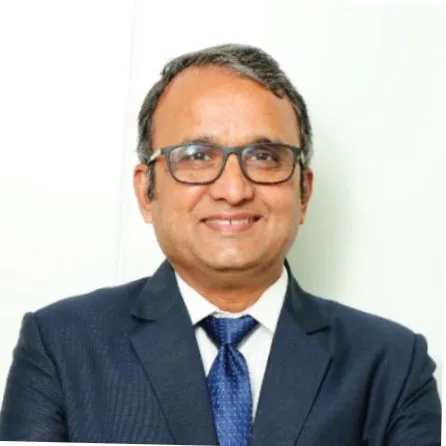
Dr. Chandrashekaran Siddamadappa is a doctorate in molecular biology, with 22 years’ experience as an entrepreneur in the field. He leads Vipragen Biosciences Pvt Ltd as Founder & Managing Director and has recently founded Glogene. He had founded Enzene Biosciences in 2006, later selling it to Alkem Laboratories. He can be reached at cshekran@gmail.com.
Mr. Lalith Kishore is based at C-CAMP (the Centre for Cellular and Molecular Platforms), the enterprise incubator for biotechnologies, and leads the ‘Indigenization of diagnostics’ (InDx) programme. He spent over 17 years with GE Healthcare, responsible for growing the business. During the COVID-19 pandemic, he headed the InDx programme, that dramatically brought down the cost of the COVID diagnostic tests. He can be reached at lalithhema@gmail.com.
