

On India’s HPV Vaccination Programme and its Rollout
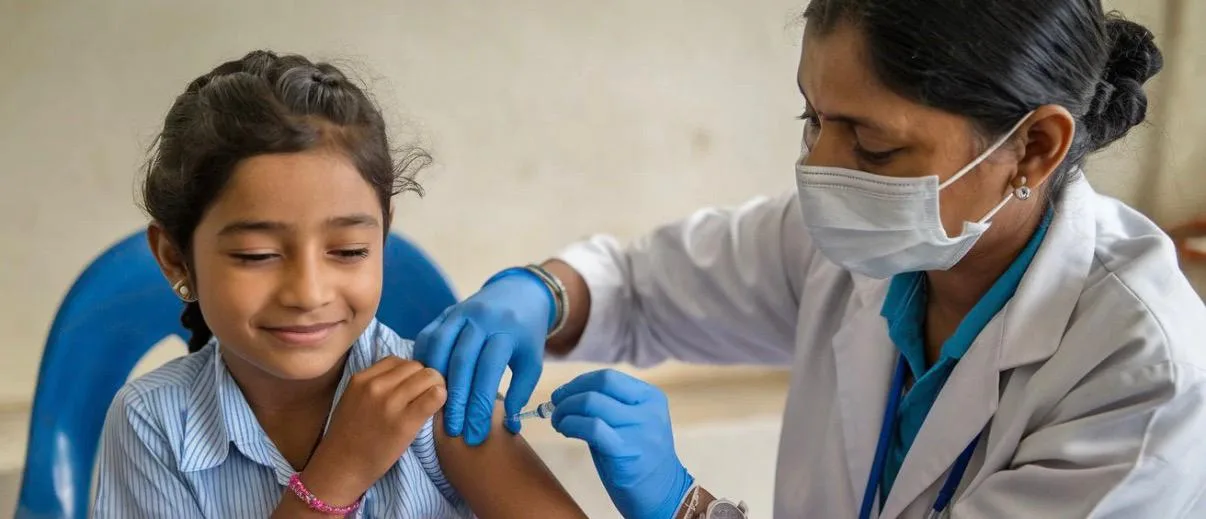
This is a conversation between Prof S. Krishnaswamy (SK), bioinformatician and Dr. T. Sundararaman (TS) to elaborate on the many dimensions of decision making related to the recently announced government programme for universal vaccination of all adolescent girls with HPV vaccine as a measure of prevention of cancer cervix:
SK: So, Sundar, there’s been a lot of talk about, nationwide about scaling up of HPV vaccination (human papillomavirus vaccination) for adolescent girls at the age of 14. And surprisingly, you’ve been quite silent on it. So, what is your take on it? Is it safe? Is it effective? Is such a programme called for? Has it been designed correctly?
TS: My silence is an active silence. One needed to frame the discussion in a particular way. A simple yes or no will not do. Let me put it his way. If a parent comes to me, and asks my advice saying that the school headmaster has asked for consent to give the daughter the vaccine, I would probably, with necessary explanations, strongly recommend that he/she gives the consent. But then if the question is asked “should we have national public health campaign to universalise vaccination against HPV for all adolescent girls?”- I would hesitate, and say that such a decision depends on a lot of other considerations. I am not downright negating such a universal HPV vaccination campaign, but nor do I want to be one of its cheer leaders. HPV vaccination has at best a modest role to play, and several caveats apply.
SK: Why don’t we start at the beginning? What is the rationale for the HPV vaccination?
TS: It is primarily to prevent cancer cervix. HPV is a virus that is sexually transmitted. Women, and men who are sexually active, are likely to get infected, and more so if there are multiple partners. Over 80 percent of those who will get infected will clear the infection without any intervention- on its own it disappears. But in 10 percent of women this infection will become chronic and persist. Over time, it will lead to a pre-cancerous lesion and then many years after this pre-cancerous lesion has developed cancer cervix can develop in about 10 percent of those who have chronic infection. Given that millions of women are exposed to this infection, this still leads to about 80,000 cases of cancer cervix in India, making it the second most common cause of cancer deaths in women in India. Breast cancer is the most common. Most, though not all, cancer cervix cases are associated with prior HPV infection. About 5 to 10 percent occurs without prior infection. There is now robust evidence that a girl who has no chronic infection has a 90 percent reduction in the likelihood of getting this form of cancer.
SK: That is for an individual. But what is the expected effectiveness of the vaccination for a population level reduction of cancer cervix?
TS: Some more on HPV and cancer cervix. There are over 120 serotypes (varieties) of HPV. Of which only 13 or 14 are associated with the development of cancer. Of these two serotypes 16 and 18 account for about 70 percent of all cancer cervix cases, another 7 serotypes contribute to a further 20 percent of cases, and the remaining 5 serotypes account for less than one percent. The quadrivalent vaccine Gardasil-4 that is being introduced, prevents infection from the first two – 16 and 18 serotypes. Gardasil-4 also prevents infection with sero-types 6 and 11. These two HPV types have nothing to do with cancer, but prevents a nuisance condition known as anogenital warts. In addition, we note, that the vaccine is not 100 percent effective in preventing infection from even these two sero-types. Further an optimistic estimate of the coverage we would achieve with such a scheme is again about 70 to 80%. Taking all these factors together the health technology assessment (HTA) study’s projection is that the proposed HPV vaccination would lead to an expected population-level reduction in incidence of cancer cervix by 36.2 % and of mortality due to cancer-cervix of 35.8%. This percentage reduction refers to the likelihood of getting cancer cervix over a lifetime in the dynamic cohort which comprises of a large section of reproductive age female population which are sexually active but not vaccinated, as well as progressively new entrants into the cohort of girls who will start getting vaccinated at the age of 14 years. Such a vaccination program when continued over a 15-year period, will lead to a lifetime reduction in risk of cancer incidence and deaths by about 36%. And since cancer cervix largely develops in women in the ages of 30 to 60, the benefits of immunization in girls we immunize this year, will be realised only about 20 or more years from now. Till then the incidence of cancer cervix and mortality due to it, will be unaffected by the introduction of the vaccine.
SK: Are you implying that this 36.2 percent reduction in incidence in cancer cervix is too low to make the programme viable.
TS: Far from it. These figures are based on the Health Technology Assessment study done from the HTA Hub at PGMIER School of Public health, and these are done for HTA India-Board. It’s a very competent expert institution and this is a robust study. The study actually shows that if we weigh the expenditure on the programme, against the expenditure that would have been incurred in treating these many cancers and the lives saved, the introduction of this programme is most cost-effective, it is in fact cost-saving. We do not need to have an unrealistic and over-optimistic narrative of expecting an 80 percent reduction in cancer cervix to justify this intervention. On the field, not surprisingly but somewhat foolishly, the vaccine is getting promoted as a protection against all cancers. Such hype, a collateral of setting achievement targets, could be counter-productive. But otherwise, the study indicates that even this reduction is a good achievement and well worth the expense. Of course, cost-effectiveness studies assumed that vaccine costs would be about Rs 450 or less for the vaccine and about Rs 50 for the delivery. The costs of treatment saved assumed that over 50 percent would be treated in the private sector with high out-of-pocket expenditures. There are other studies whose findings align with this one, but this is the main study we should rely on.
SK: But when we have over 100 serotypes of HPV, of which 14 serotypes are associated with cancer, how are we confident of going ahead with a vaccine that covers only two serotypes? Do we have data on the HPV serotypes associated with cancer cervix across the many states of regions. Or are we based on patterns prevalent in high income countries? Do we even have a good epidemiological understanding of the incidence of the disease and mortality due to it across the states? If other serotypes are dominant, and we are covering only for two, will not the other serotypes lead to cancer-cervix.
TS: No, we do not have studies from all the states on HPV serotype studies. There are a few studies, from one or two states that do indicate that the serotype to cancer cervix association is similar to the global pattern, meaning that serotypes 16 and 18 dominate. But we do need more studies and data on this aspect. But this is not a case for delay in the roll out. Often in public health decision making there is this level of uncertainty with data. With available evidence we can assert that protection against 16 and 18 will definitely lower disease incidence, though we cannot be so sure about the extent to which it will do so.
We do however know that states with better socio-economic development and better health outcomes have a lower incidence of cancer cervix. And in these states are seeing a good decline in cancer cervix cases even without the vaccine. This is because with more responsible sexual behaviour and hygiene, HPV transmission decreases. The need for the vaccine, is greater in states with poorer health systems and more adverse socio-economic factors. Unfortunately, the roll-out of vaccination is earlier, faster and more complete in the states which have the greater decline, and is likely to face greater challenges in the states where the impact would be more.
So there are three assertions about going to scale with universal HPV vaccination: a) gain will be modest-only about 36.2 percent reduction, and b) gains will be delayed with effects seen only after 20 years or more and c) that implementation will be more difficult where the need is more. The main implication of these three assertions taken together is that for a long time to come, HPV vaccination will remain, the supplementary strategy. The main strategy towards reduction of deaths from cancer cervix, will remain periodic screening, once in three to five years, with follow-up to treat pre-cancerous lesions and cancers in a timely basis, along with appropriate health promotion built around sexual health.
SK: But why not increase the achievement level by going for a nonavalent vaccine. There is a vaccine now, Gardasil 9 that provides coverage for 7 serotypes associated with cancer plus the two associated with anogenital warts.
TS: With the nonavalent, we protect against 90 to 93 percent of serotypes causing cancer as against the quadrivalent that covers about 75 to 80 percent. This nonavalent vaccine is about three times costlier, and I doubt that HTA studies have been done on it. Do note that even for quadrivalent vaccine the HTA study assumed a price of Rs 470 per vaccine dose. If procurement costs are higher, it may not work out as cost-effective. But the bigger point is that for reasons already discussed, the reductions will still be modest and HPV vaccination will remain a supplementary strategy- not the main one.
SK: So, as I see it, one fear is that the large scale, well publicised introduction of HPV vaccination gets projected as proactive government action on rising cancers, and the role of cancer screening programmes get distracted from, if not undermined. What is the stage of the screening programme. and why are we not recording its contribution to the decline.
TS: Precisely. The introduction of universal vaccination for HPV cancer cervix should not become any reason to slow down on cancer cervix screening and treatment. Though government formally acknowledges this, and there is a universal screening for cancer cervix and cancer breast in place, currently less than 5% of screening needs have been met-and progress in this is stagnating. And even of those who screen positive, the follow-up systems for appropriate treatment are not in place. I think that’s really the issue. When current cases of HPV infection, pre-cancerous lesions and cancers are remaining undiagnosed, I think our priority should be to push for more screening and the appropriate treatment. The emphasis on assured and complete follow-up for those detected as having cancer is missing. To the extent that HPV vaccination distracts from this main strategy, one needs to be cautious in the welcome. And remember, that even more prevalent than cancer cervix is cancer breast. And cancer breast also requires screening at the primary care level, confirmation within a month, and if confirmed a mix-mode treatment with chemotherapy, surgery and radiotherapy, which means a high level of continuity of care organisation at the tertiary care level and continuity of care across levels. And if we organise this for cancer-cervix we also do it for cancer-breast and vice versa.
We must also emphasize that as responsible sexual behaviour increases, as there is a greater health awareness in terms of sexual health-related practises, which in turn are related to women’s education and empowerment, cancer cervix decreases, but cancer breast continues to increase. And therefore, it is more important that we put our emphasis on the right box – both health promotion and periodic screening and follow-up.And while HPV vaccine definitely does bring gains, and those are affordable gains within a particular context, it is not a substitute.
SK: What is the global scenario? The argument is raised that most countries have already adopted this and India has been slow to follow.
TS: In terms of global scenario, most high income countries had universal healthcare systems in place that would have assured universal screening and follow up under public expenditure. HPV vaccine followed, and did not lead the way. The first cohort of adolescents who got immunised are now reaching cancer-occurring age groups, and there is a clear reduction in the incidence of cancer cervix. Since these countries have universal healthcare where all cancer screening and treatment is paid for by the government, the further reductions in cancer-cervix is saving them public expenditure. The caution is that we know that the vaccine is effective for at least 11 to 15 years. We really don’t know beyond that, and we will need to keep watching what happens down the line.
However, in most countries of the developing world, the costs of cancer care are met through out-of-pocket expenditure. Introduction of universal screening and appropriate treatment as part of public services has huge budgetary implications, much more than for the introduction of the vaccination. There will therefore be a trend to play off the cost-effectiveness of one against the other, and more as a sub-text make a case for prioritising the roll out of the HPV vaccination over that of universal screening and health promotion.
SK: Now coming to the safety aspect, how sound is the evidence that HPV is safe? And how reliable are our systems for tracking adverse events, especially in rural areas where there’s not much digital connectivity? This is a valid question because there have been reports of deaths related to vaccine about 15 years back.
TS: The consensus of evidence, as it stands today, is that it is safe. There are no major fatalities. This knowledge is based on many international studies. About half of these studies have had pharma support, but there are enough robust studies without pharmaceutical industry support to support this conclusion. This does not mean that there are no minor side effects. Fainting occurs occasionally. And for that reason, it is essential that the vaccine is given in a clinical setting and the person given vaccination is under observation for one hour or so before they are released, so that we are sure that the more common and immediate side effects are addressed. And there is a certain range of intermediate side effects that also occur. But none of these have been disabling or life-threatening in the long run. So as it stands now, the vaccine, is among vaccines, one of the safer vaccines in use.
However rare adverse effects can occur when applied over a large population, and for that reason the system needs to be alert to identify this. India has an Adverse Effects Following Immunisation (AEFI) programme on scale. I would add that it is a fairly robust programme. I wouldn’t trivialise the programme because it undermines what we have done. What is missing in it is two elements. One is that the information is not put up on the public domain or easily accessible to researchers and secondly there is no compensation for those suffering from serious side effects. This is much more so for measles, where both the benefits and the adverse effects including fatalities are well known. Unfortunately, governments are scared of public scrutiny and seek to dominate the public narrative, but in this long run, public scrutiny builds trust, which in the area of vaccines is a growing problem. Where serious adverse effects are known compensation is an ethical issue, for the one in a million normal person paying the price for everyone being safe, requires to be acknowledged and compensated. And therefore, AEFI systems and compensation is part of the global standard of care and we should insist on it. It also acknowledges and safeguards the health workers who work in these programmes.
The protest against introduction of HPV vaccination 15 years back related not only to adverse effects, but also to informed consent. Informed consent remains important even today. And if there is a refusal of consent, however ill-informed the refusal, it would be wrong and short-sighted to overrule that. Current government announcements of the programme explicitly provide for such informed consent, but we should be wary of adherence to this ethical norm, when numerical achievement-targets are set. Our health system and providers must learn to accept and be comfortable with the fact that if informed consent is denied, there is a legitimate right for people to do so, and we should not stigmatise or castigate or otherwise try to push. It may take a longer time. But it builds trust.
SK: What about the choice of HPV vaccine for inclusion in the programme. Is the decision to go for a universal vaccination based on only Gardasil 4, a product of the German Multinational Merck, justified considering that an Indian equivalent Cervavac is also available? The justification seems to have been that Gardasil 4 can be given as a single dose whereas Cervavac needs to be given as two doses, and it is difficult to ensure that girls take the second dose?
TS: Firstly, both Gardasil-4 and Cervavac are more effective as two doses. But Gardasil has shown that a single dose also provides a similar amount of immunity build up- and therefore potentially the same degree of HPV prevention as two doses. Remember that for any HPV vaccination effectiveness study, the end-point is only reduction in incidence of HPV infection and the presumption is that if HPV infection will be reduced, subsequent pre-cancerous lesions and actual cancer will be reduced in proportion. Cervavac’s effectiveness at two doses is well established and now it has also demonstrated a similar effect with one dose of the vaccine. But there is the claim that Cervavac is not yet approved by WHO whereas Gardasil has WHO approval. If this is a rather thin ground for preferring Gardasil 4 over Cervavac, it indeed is so, as the latter is priced at only one third that of the Gardasil 4 price-on the market. The game changer in this regard is that the Gates Foundation/GAVI has agreed to promise the necessary supplies of Gardasil free to the Indian government until 2027. So presumably the price difference does not matter.
SK. So, should we go in for that? I recollect that India has given about $47 million to GAVI for 10 years. And even if not linked to that, is a gift of the vaccines a good idea? We do not know at what price GAVI/BMGF has purchased the vaccine from Merck? And anyway after 2027 we will need to purchase vaccines. I remember your stipulation that the cost-effectiveness of HPV rests on a certain assumed price of the vaccine- what if it rises subsequently for the vaccine is, I presume, under patents.
TS: I would agree with you. Despite the free offer, we could have waited for the domestic manufacturer to be ready and approved. That will also make India more self-reliant, and build up technologies. Of course, the domestic manufacturer is the Serum Institute of India, an Indian multinational, but still more amenable to Indian requirements. For Merck it is a good deal. As they have introduced Gardasil 9 in a big way, they possibly benefit from reducing their Gardasil 4 stocks at an undisclosed price, while maintaining their monopoly position in the market. For GAVI it is a good deal, because they have been able to re-order Indian public priorities, and commit the government to this programme even when other legs of the programmes against cancer are struggling. And because Gardasil 4 is being supplied free, the lower price of the Indian vaccine is no longer a consideration. But remember again, that cost-effectiveness is price sensitive, and if after 2027, the prices rise too high, then it does not work for India. India has to be ready with and insist on getting back to Indian product in 2027, for which government has to ensure the development of enough Indian manufacturers with the technical capacity to manufacture not only the current Cervavac but newer versions of this. If the vaccines given as a gift, sets back the Indian government’s commitment to developing the Indian vaccine, that’s terrible.
SK: Yes. But let me digress. You touched upon this Merck and monopoly. My question is as to why a were vaccines such as against HPV not being made with public sector so that India can be self-reliant?
TS: This question came up in COVID vaccines also. It is a difficult to answer it in one line. Even in the earlier published conversation that we released earlier this month we left it hanging, stating that it will need a separate conversation. The policy ecosystem for innovation and domestic manufacture of biologics has to be created.
There is another possible approach. Since companies develop these vaccines with public financing or with commitments from the government as more or less a monopoly purchaser, we can insist on governments sharing a right over the patent, and subsequently government sharing the patent under voluntary licences to a number of competent biologics manufacturers in India. This will remove monopoly in manufacture and the resulting competition could help with more innovation and lower prices without compromising quality. This is the better immediate option. One of the manufacturers provided with the voluntary license could be a public pharma. This could help nurture the public pharma back into health, and back into building the ecosystem for that. Such an approach is better than a monopoly by a single multinational, whether it is Indian or foreign based.
SK: Coming back to HPV, this focussing only on girls could reinforce the skew in gender responsibility for sexual health. Should not boys be included in the vaccination programme, like in some other countries, for considerations of equity and for reducing the transmission and protection against other HPV related cancers?
TS: There is a case for including boys and men also. Penile, anal and oropharyngeal cancers have known associations with HPV. I do not know of any cost-effectiveness study done in India on this- and my first guess is that it is unlikely to be cost-effective. But that is an uninformed guess. We need a study. It is worth noting that the PGI Chandigarh HTA hub study that I referred to earlier did look at income inequity and concluded that the vaccine is a pro-equity measure since the outcomes are more significant in the poorer socio-economic groups. So we do know how to factor in equity into the assessments. However, reaching these socio-economic groups is a much tougher challenge – both in organising vaccine delivery and in terms of reluctance to accept vaccines.
SK. Could you elaborate on these challenges?
TS: Supply side constraints relate to access to primary health care and outreach services. Such coverage is weak in the rural and urban poor and in marginalised communities, tribal populations etc. So if even diabetes screening and access to medication has not reached them, reaching HPV vaccine is more difficult and anyway it is upsetting priorities.
On demand side, the feedback I get from ears on the ground, thanks to the network support, is that when government is trying to promote HPV vaccine, there’s a pushback from the population that says: “look we’ve had a bad experience with the COVID-19 vaccine. We do not want a repeat with this vaccine? How are you sure that the HPV vaccine is not a similar experience?”
Providers are quite surprised by this pushback. There was no prior perception that vaccination against COVID-19 had been perceived as such a negative experience? But this trend is very, very widespread and field workers cannot quite understand this. While incidence and variety of COVID-19 side effects are more than the official claims, in my perception it was certainly not so widespread as to cause this. But what it does indicate is a breakdown of trust between the population, especially its poorer and more marginalised sections, and the government with regard to some government interventions. It may not relate specifically to the vaccination, but to the whole of the covid 19 response which seemed more protective of the elite and dismissive of the concerns of the poor. This is happening globally, but it takes its different forms over here. And we have to be very careful that when the government is not responding to the immediate felt needs of non-communicable diseases, to start with a drive for HPV vaccine can undermine the trust. To achieve targets, if statements are made like “ take this vaccine, it will prevent your girls against cancer.” That’s not informed consent- and that will not help. The vaccine does not prevent cancer. It prevents against one type of cancer. And only in a modest way. And yet careful scientific assessment has informed us, that it is still worth vaccination to achieve even this modest level of reduction.
Remember that even in past immunisation programmes, trust has been very low in communities which have serious reasons to mistrust the government, like minorities, for example. Tribal communities, for example, who have borne the brunt of policies that adversely affects their lives pushed through in the name of science and development, also view such new initiatives with caution. So, the effort should be to reach out to felt demands of those sections, the healthcare services that they seek, so that they begin to trust the health system and then to allow them the space to decide or decide against new initiatives and continue with the persuasion. HPV vaccination is not something that we need to push in any more intense way. All of this the government understands. But as progress will be slow, and donors are impatient for results, one is really worried about a target driven approach taking over. The target driven patriarchal approach believes that people can’t decide for themselves and the state will have to decide for themselves and certain public health measures have to be enforced. And that unless providers are pushed by targets they will not do a proper job.
SK: So, we understand that periodic cancer cervix screening will need to continue, not only in the next 20 years, when the women at risk have not been immunized, but even in the next 20 years, when they have been immunised. But what are the budget implications since HPV vaccine only supplements and does not substitute for screening and care.
TS: The Indian HTA study has looked at this and concluded that even after a good coverage, while cancer screening will need to go on, it could be less intensive and the overall reduction of cancers would be much better. And anyway, screening for cancer cervix should synergize with screening for other common cancers- breast and oral cancers. And while the reduction due to HPV vaccine may not be substantial, it is still worth the money we are spending. But then cost-effectiveness is not the same as budget impact. An additional budget will be required to provide this vaccination, which is about Rs 400 per vaccine dose and about Rs 60 for the vaccination. Now if this Rs 460 comes from an additional budget allocation, all is good and the benefits are as predicted. However, if the expenditure on HPV vaccination, displaces other essential interventions in non-communicable disease, then the net benefits may be less. And one of these interventions that are most likely to be displaced is cancer screening, because they are least, most fragile and less established.
Cost-effectiveness experts sometimes compare the cost-effectiveness of two widely different supplementary strategies in terms of the respective unit measure of cost-effectiveness which is a unit called incremental cost per effectiveness gained, where effectiveness is measured in terms of QALYs (Quality Adjusted Life Years), or clinical outcomes. It could turn out that the ICER (Incremental Cost Effectiveness Ratio)value for HPV vaccination is less than that of screening and care, and this could become a basis for a wrong prioritisation. That would not happen in most high-income countries which have universal health care since public financing of cancer care is the baseline assumption. But such a skewed prioritisation can happen in an LMIC (Low and Middle Income Country) due to a questionable ethical basis on which the HTA is done and a failure in understanding how a right to healthcare plays out. Suffice it to say, that there has to be a budgetary increase that covers the introduction of this vaccine, preferably visibly seen and shown to be not displacing other essential care. This caution is essential as many new programmes are announced without additional budgets and this leads to cut-backs in existing schemes and workforce, and nobody is really measuring the lives lost due to these cutbacks. The same health technology processes that measure the effectiveness of health technology, of the introduction of vaccine, can measure the lives lost due to the cutback of existing schemes. I think we need to deploy them in that understanding.
SK: You also mentioned that there are social, other determinants of health, which reduce the amount of cancer incidents that happen for cervical cancer. So, should India not be addressing the non-medical determinants of cervical cancer, nutrition, early marriage, responsible and safe sexual behaviour, access to health care, etc.? Would that not be a good strategy?
TS: Absolutely. Anything that controls sexually transmitted infections, anything that promotes responsible sexual behaviour and sexual hygiene, is definitely going to have a very measurable positive impact on reduction of HPV infections and therefore on cancers. Reduction of HIV transmission is one major collateral gain, but even the other ones which are like syphilis and gonorrhoea, and chlamydia infection are still around in a big way. So, I think that the notion of we have given immunisation, therefore you are protected and the rest of it does not matter as much any longer. That’s a great danger, but acknowledging this is not an argument against vaccination.
SK: The prioritisation and reliance on technological “magic bullets” to address disease often substitutes for action on social determinants or strengthening public health systems.
We know that big pharmaceutical interests make huge profits from a choice to prioritise universal vaccination. International philanthropies and multi-lateral and bilateral financing agencies and corporations also promote solutions that lead to public expenditure going towards marketable commodities as it stimulates commercial investment and profits. The concern is that the introduction of HPV vaccination is driven by such commercial considerations.
TS: There is much truth in what you are stating. But we need not interpret the decision on vaccines as part of a conspiracy, much less some notion of an imposed western science. One needs to understand how institutions of governance are shaped and how they function. The Indian government press release on the HPV vaccination scheme has been careful to state that a) informed consent will be taken, and that its introduction will take a campaign form for only three months, after which time the vaccine would be available in primary care centres and not pushed and finally that its introduction is additional to existing strategies like screening. But when it comes to implementation, the financing and procurement of the vaccines gets acted upon immediately. Finance departments favour schemes which do not require additional staff, and the intervention is based on diverting existing staff. On the other hand when it comes to scaling up screening and care for cancer, the required expansion in human resources struggle for approval and continuity of care arrangements considerable coordination and reform. In fact, I have argued that the continuity of care required for cancer care cannot happen without adoption of a right to healthcare. Further, there is a strong advocacy and monitoring support for vaccination, while there is almost no one pushing the government for expanding screening and continuity of care. So, policy as practiced, will differ substantially from policy intent. I think it is incumbent on the public health community to show that the introduction of the vaccination must be integrated with the rest of cancer care and strengthening of integrated primary care systems, without which the effectiveness in terms of health outcomes, will be far short of expectations. That of course will convince only those stakeholders whose main interest lies in health outcomes and not in favour or commercial profits or just building a political narrative in support of those in power.
SK- But do we have ways to measure the reduction? Are these measures fit for purpose?
TS: Any measurable decrease in cancer incidence is going to be a long-term gain. But that is not a reason why we should not start now, which will provide us with a robust disaggregated baseline. One cliché on health sector reforms, is that it was best if it was initiated 15 years back. The next best time is today. Much can be done to improve measurement of cause-related mortality. And we have discussed this earlier.
We also need better studies on measuring HPV infection, because a reduction in HPV infection rates is the earliest visible indication of the programmes effectiveness. I am not sure about what has been done in this regard. If at least in some districts we have a universal screening programme with good quality of follow up we would get a good baseline for pre-cancerous lesions and cancer incidence. But even this will be able to show results only in a 15 to 20-year time frame. Given this lag, decision making has to rely more on theory than on empirical observation. This is a new world we are coming into and this world will work only for public health, only if there is trust and there is transparency which builds that trust. And therefore, any over-projection of gains or achievements will be counterproductive . But framing it, this whole debate, in a pro-vaccination and anti-vaccination frame is also doing violence to the whole nature of intervention that civil society needs to do on this area.
What we need is making the vaccine accessible widely, follow this with an educative, science and health communication exercise to improve the public understanding of the evidence and how to interpret this. The challenge for the public health community is to safeguard peoples interests, while being able to limit the greed of big pharma and be able to create alternatives in this regard. Women will benefit from the vaccination decades later and the benefits will be more if it is integrated with a comprehensive approach to primary health care and the right to health care. But currently it is not so integrated. So, if somebody were to assert that currently it is more driven by the needs of big pharma than the health needs of people, they may be correct. Unless implementation proves them wrong.
SK: The discussion has been wide-ranging. Could you conclude with some assertions for public policy where we can come to a consensus.
- Let me try.
First, we can agree, that this vaccine should be universally available and accessible, free of cost to any girl who wants this. And it need not be limited to adolescents at the age of 14. It should be promoted even at higher age groups, especially if people have tested and found themselves HPV negative.
Secondly, vaccination should always be based on informed consent, and no form of direct or indirect form of coercion of either provider or patient should be resorted to. This should go along with a strengthened reporting AEFI system, where the reported adverse effects are more transparent, with compensation for the affected as required.
Thirdly, the scheme should come along with an additional budget so that this does not displace much of the more essential care that it is already in place.
Fourthly there is need to increase coverage and effectiveness of the screening and follow up programmes for all three common cancers- cervical, breast and oral urgently and this requires additional financing and workforce. The WHO calls for what it terms a 90-70-90 approach. Meaning 90 percent of the 14-year-old girls should be vaccinated, 70 percent of the women should be screened and of those suspected with disease at least 90 percent should get the necessary follow up care. If we are not careful, we will achieve a 90-5-10 approach. Screening coverage is currently as low as 5 percent, and follow up too is dismal. Unless we improve our figures related to the main strategy to address cancer cervix, the worst fears about this HPV programme would be confirmed.
And finally, I think that to ensure prices are affordable, public financing of innovation, shared control over patents, and price and quality regulation, will all require greater priority in public policy.
Since most of these conditions are far from being fulfilled, it would be premature to celebrate this programme, but there is no urgent need to oppose it. Our focus could be on building a better public understanding of public health.
Acknowledgements: Gratefully acknowledge Dr Shankar Prinja, Professor Health Economics, for sharing his work and discussing its interpretation with me, Prof. S. Krishnaswamy for developing the questions and helping us explore the many aspects of this topic together. and to Dr Arun Krishna for his assistance in the recording and transcription. Please note that the accountability for final views, including errors if any, are with Dr. T. Sundararaman
Note: Readers can enter into the conversation by providing their feedback at the end of this article on the website where it is posted, or on any of the social media platforms where it is circulated. This is the 31st in our series of health policy conversations. To access the earlier conversations and other curated information on health policy and health systems strengthening please visit the website : https://rthresources.in/
