

Conversation On: Learning from Tamil Nadu’s Public Health Act- Past, Present and Future
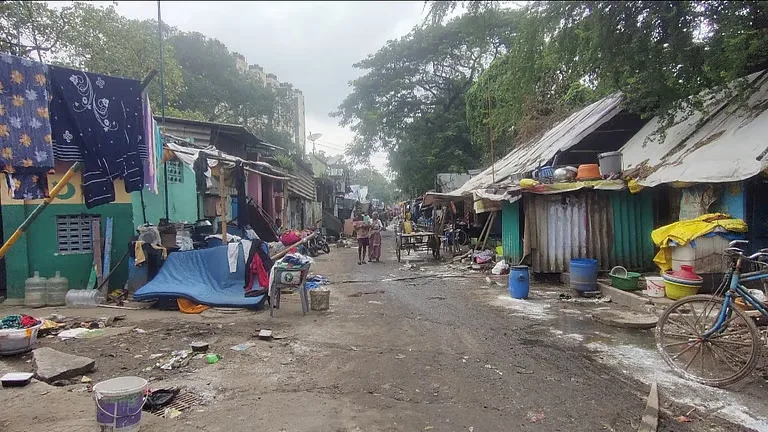
In this conversation Dr K.Mathivanan (KM), retired Deputy Director of Health Services Tamil Nadu, discusses Tamil Nadu Public Health Act with Dr Arun Krishna (AK), Postgraduate student in department of preventive and social medicine, JIPMER, and Dr T. Sundararaman (TS). Dr Mathivanan joined service as a Health Officer in 1983 and retired after 30 years of service in 2012. He is part of Tamil Nadu’s famed public health cadre, where the person is trained and works in public health positions and can interchangeably teach public health as medical college faculty. During his long career he has worked as city health officer and district health officer in many districts and towns. (more details at end). Even after his retirement he remains active as a mentor for serving public health officers, much of it through a WhatsApp group on Public Health Laws as well as a resource person on training programmes.
AK. Dr Mathivanan, could we begin with a brief historical back ground and the main features of the Tamil Nadu Public Health Act, 1939.
KM: The Tamil Nadu Public Health Act came into being in 1939. But before that, there was a legal framework providing public health powers under different Local Body Acts. However, when Health Officers used public health provisions of Local Body Acts to take action in the interest of community, their actions were restrained or restricted by Local Body Authorities whose political or financial interests could be in conflict. The government understood this friction and enacted a separate Public Health Act where Local Bodies were empowered and made accountable to act on public health determinants, while the Health Officers under the Directorate of Public Health could act independently to ensure the health of the community. The Act is modelled on and has direct historical continuity with the English Public Health Act of 1875, which was direct outcome of Edwin Chadwick’s pioneering work on sanitation—water, environment, food, drainage, and compulsory posting of health officers in England. In fact, Chapter 7 of this Act, on Disease Prevention, is almost a replica of the British version.
TS: Let me give an all-India overview on the situation with regards to the Public Health Act. This Act was enacted in 1939, covered all regions of the original Madras Presidency which includes the present-day Tamil Nadu, Andhra Pradesh, Telangana, Malabar area of Kerala. This continued after Independence as the Tamil Nadu Public Health Act and the Andhra Pradesh Public Health Act (Telengana does not seem to have adopted it). Kerala has also historically acquired one Act for Travancore- Cochin states and another for Malabar region, merged it recently to create the Kerala Public Health Act of 2025. Madhya Pradesh enacted the MP Public Health Act in 1949, too has such an Act in place. Puducherry Public Health Law was enacted in 1973 and Goa Public Health Law in 1985. No other state since has gone for such a law. Thus in India, only 5 states and one UT have such a public health law in place- and all of these are modelled on the Tamil Nadu prototype. This is not to be confused with the laws enacted during or after the covid pandemic, in UP (2020), Karnataka (2020), Gujarat (2025), which are essentially laws for pandemic response. Nor should they be confused with Assam Public health law of 2009 and Rajasthan law of 2023, which are focussed on right to healthcare and have no provisions on public health. At any rate both these laws do not have any rules framed, and remain entirely on paper.
AK: Could you please briefly describe the main features of the Tamil Nadu Public Health Act, 1939.
KM: The larger goal of the Act is the fulfillment of society’s interest in assuring conditions in which people can be healthy. The Act broadly covers two domains. One is Sanitation: water safety, water sanitation, waste disposal (solid and liquid), toilets, carcass disposal, environmental sanitation, food sanitation, sanitation in lodging houses, shops, markets, trades, fairs, festivals, buildings, vector control, and prevention of nuisances—all different aspects of sanitation. The other is Disease Prevention—epidemic and notifiable diseases under Chapter 7. In addition, there is a Maternal and Child Welfare provision which is only of an advisory nature to the Local Body. Tamil Nadu Public Health Act has a total of fifteen Chapters. Out of fifteen Chapters, nine sanitation-related Chapters which cover water, food and environment sanitation taken together form the backbone of the Act. The law is a manifestation of the “Sanitary Revolution” which the British Medical Journal called the most important ‘medical-innovation’ of all times, a revolution that prevented and continues to prevent millions of deaths across the globe. Hence, sanitation is the core function & important pillar of Tamil Nadu Public Health Act.
The other main strength of the Act is how it empowers governments to act, and to ensure that the essential public health functions are assured. Firstly, it makes Local Bodies accountable for all these functions. And then it provides for a cadre of Health Officers who have the capacity to monitor and enforce the necessary and appropriate actions under the law. To ensure independence from Local Body Authorities, the Tamil Nadu Public Health Act mandates appointment of Health Officers for the Local Bodies (Section 9), and provide legal powers for the Director of Public Health over the Local Bodies (Sections 7 and 13), advices the Local Bodies to provide adequate administrative and logistic facilities to Health Officers (Section 15), and allows the Health Officers to make use of public-health-related provisions of the Local Body Acts in addition to those in the Tamil Nadu Public Health Act (Section 16). There is recognition that, the Local Bodies could resist the authority of Health Officers, but that independent public health action is safe-guarded through Section 14.
AK: Are these provisions still sufficient for today?
KM: Not fully. An Act framed in 1939 cannot completely address today’s needs. New trades like tattooing and massage parlours, technological advances lead to newer public health problems, social and life style changes, and mass-gatherings at-short-notice, and then there is administrative restructuring across departments etc. needs new Chapters / new Sections in the Act. Many public health norms in the Act/Rules are outdated, like insisting toilets be 40 feet away from buildings, which belonged to the era of dry latrines etc. This is not an absolute barrier though for the present-day implementation of the Act. Under Section 128, the Government can enact Rules under the Act, to meet these new needs and developments, but they should do so without changing the Act’s core structure.
AK. The Act has been amended many times, but has it adhered to retaining the core structure?
In the initial years, many amendments were carried out without affecting the core structure of the Act. But in recent times this distinction is overlooked. In the area of autonomous action, there have been many unwarranted compromises in the Act. Before 1989, sanitary staff were directly under DPH control, but after the 1989 amendment, the administrative control of sanitary staff shifted to the Directorate of Municipal Administration (DMA). Though it did strengthen local bodies’ powers, but prevented the sole independent control by the public health authorities. Health officers however continued to have some independent roles on public health matters. Further, in 1963 Sanitary Officers and in 2020 Police Officers were also given the powers of Health Officers under the Act. This is retrogressive, for it undermined the role of public health knowledge in the performance of public health duties. In 2023, Tamil Nadu Urban Local Bodies Rules required Health Officers to be posted and to work under DMA. This undermined the very autonomy of the Directorate of Public Health. Of late, some Health Officers transferred by DPH are not allowed to join duty by DMA, which is a violation of Sections 9 and 13 of the Act. These conflicts between the Urban Local Body administration and the public health department continue to undermine the core-objective of the Act. During the Covid-19 pandemic, the powers of Health Officers were extended to the Police Officers. This was clearly a retrogressive move, since the distinction between a public health problem and a law-and-order problem was lost. Also lost over time is the power of Health Officers. Health Officers need independent prosecution powers to act effectively. Otherwise, enforcement of the Act becomes a hostage to local political or administrative interests.
In the past when major diseases like smallpox, plague, cholera, leprosy, venereal diseases etc. were incorporated, either as Sub-Chapters Chapters or Rules in Tamil Nadu Public Health Act. This type of amendments made the main structures of the Act remain untouched. But during Covid-19 pandemic, Covid-related amendments distorted Sec. 76(2). Here, 9 existing Clauses in Sub-section 76(2) become 21 Clauses. These amendments could have been done by framing separate ‘Covid-19 Rules’ under Sec. 81 without distorting the core structure of the Act. Presently, there are many important public health threats like TB, HIV/AIDS, Dengue and NCDs etc. are not being addressed in the Act. Diseases like cancer and snake-bites are added as ‘Notified Diseases’ under section 62, though these do not fit in the core public health objective of the ‘Notification’ under that section, and also, they do not call for immediate public health legal interventions.
AK: The shift of staff and powers to local bodies could be seen as a necessary part of decentralisation and therefore desirable.
KM: Decentralization is important, but public health cannot be treated like any other local administration department. An exception must be made. Health officers must be able to act in the interest of community even if the action goes against Local Body interests. Otherwise, the objective of enactment of an independent Act becomes meaningless. The Act tries to balance this. Local bodies are made accountable for their action, but the Health Officer who is autonomous can exercise oversight over this action. Health officers also have the technical capacity to guide such action. Even after decentralisation to local bodies, the state authority has a role in ensuring adherence to standards and that areas which are lagging behind are incentivised or penalised.
AK: But so many of the public health determinants are covered by other laws. Does the Public Health Act overlap with other laws? How is this resolved?
KM: The Bhore Committee recommended a National Public Health Act under which multi-sectoral health-related provisions in various laws should be consolidated and made as a ‘National Public Health Act’, which is still not materialized. So, any Public Health Act is a conglomeration of public health provisions already available in other laws. There are many laws such as Factories Act, Catering Establishments Act, Food Safety and Standards Act, Environment Protection Act, Animal Husbandry laws, Waste Management Rules, Biomedical Waste Management Rules, Tobacco Control laws, Acts on Air and Water pollution etc. all have elements of public health provisions in them. The Tamil Nadu Public Health Act was meant to unify these concepts and made a comprehensive law to cover all public health related matters. The Health Officer is, or at least should not be limited / restricted / refrained from the implementation of related clauses available in the Tamil Nadu Public Health Act. He is supposed to ensure that even the public health aspects that come under other laws are to be monitored. Moreover, many of these laws have weak enforcement mechanisms, and this overlap should act as reinforcement. This role would need to be developed more explicitly with clarity in future.
AK: Coming to the issue of standards. Shouldn’t the Act have clear standards—for water quality, air pollution. for example?
KM: There are some provisions in the Tamil Nadu Public Health Act, for example, Section 23 requires periodic water testing for its safety. ‘Rules’ framed under the Section 23, mandates that legal action shall be taken under Section 24, only after analysing the water from a Government recognized laboratory. Most of the standards are in the Rules, and it is best kept there. We can thus update standards under the Act without amending the Act itself. Rules can specify testing frequency, thresholds for contaminants, corrective actions, and reporting requirements, etc. The same applies to noise, air, water, wastewater, buildings, gatherings—everything. These Rules are framed under various Sections of the Act, and their most recent amendments are not easily accessible, though they exist. And hence, most officials would not have had the chance to read these rules.
AK: How easy it to access these rules?
KM: Not easy. Government publications haven’t updated and published the Tamil Nadu Public Health Act since 1993. And even in that publication, all the amendments up to that date were not incorporated in the Act. The Rules have not been published so far. The Rules and the relevant Forms for reporting, Certificates, duties and responsibilities of various categories of public health officials etc., and the amendments till 1940s are available in the Public Health Code. The Public Health Code book was never published by the Government Press. Even most of the Health Officers don’t know that the Rules does exist, let alone the citizens. Today, much of the reliance is on informal sharing between the field level officers only. A retired Block Health Supervisor Mr.Raju, from Dindigul has personally compiled all the Rules, Amendments, Government Orders, etc. and bringing out the books for the benefits of the public health officials. Practically he is the only person I know, has a consolidated set of all the above documents relating to the Tamil Nadu Public Health Act. For the benefit of every one, the Rules etc. should be in the public domain, digitized, provided with an easy-to-use index, and placed on the official website.
AK: During COVID-19, there were a number of social restraints imposed. Are these provided for in the Act?
KM: Yes, there are many existing provisions in the Tamil Nadu Public Health Act which are more relevant, appropriate and decentralised for effective enforcement during pandemic situations. In fact, one can address any epidemic or endemic disease by framing separate Rules under Section 81. Even school closures, and affixing a notice or placard at the entrance of premises for infectious diseases was allowed by the Rules, framed as early as 1940. There are also Rules for licensing of hospitals that treat infectious diseases, long before the enactment of Clinical Establishments Act. So, it was not a good idea to amend the Act itself to introduce too many clauses for a new disease, which is what happened with Covid-19 response. These amendments not only distorted the core structure of the Act, but also made the Section 76(2) biased towards air-borne diseases control. It should have been done safely by framing separate Covid-19 Treatment, Control and Prevention Rules under Section 81 of the Act.
In the early part of the pandemic, it was the Disaster Management Act, and later the Epidemic Diseases Act was invoked. Both of them are Central Acts, and they had their own problems in their implementation in the field. But, except few newly encountered issues relating to the control and prevention of Covid-19 disease, which could have been incorporated in the Covid-19 Rules (had it been framed), the Tamil Nadu Public Health Act already has relevant, appropriate and needed provisions for pandemic control.
AK: One important feature of the Act is the role of the Public Health Board? How does that work?
KM: The Public Health Board was envisaged as a multi-stakeholder institution to advise government, coordinate across departments, examine amendments, ensure accountability and advise the Government on all public health matters. It consisted of the Health Minister, as President, the Local Administration Minister, three MLAs, Director of Medical Services, Director of Medical Education, Director of Municipal Administration, Sanitary Engineer, Director of Rural Development, one Officer nominated by the Government and Director of Public Health as its Secretary. Experts’ committees could be formed under it. Sadly, the Public Health Board has not been functional for decades. Had it been active, many erroneous or irrelevant amendments could have been filtered out. For example, someone influenced the government to notify cancer under Section 62 as a notifiable disease, saying that notification is mainly for the purposes of data gathering and for strengthening the disease management infrastructure. The Act’s notifiable disease list is meant for diseases which need immediate public health intervention for their control, and prevention of its spread. But cancer disease is not only 99% non-communicable, but also the causative agent is multi-factorial. Cancer is also an independent multi-organ disease. Moreover, disease informants under Section 64 of the Act are not only doctors, but also the head of a family, head of commercial establishments, manager of factories or public buildings, owner of a house etc. So, taking legal action on the defaulters of cancer notification is not at all practicable. There is also an exemption for public hospitals from notification under Section 64. Considering all these factors, notification of cancer as ‘Notified Disease’ under Section 64 is not the best way of gathering disease data for research / infrastructure-development purposes. If there was a functioning Public Health Board, such unnecessary amendments would have been debated and avoided.
AK: Let me take one contemporary public health issue—stray dogs and rabies. How does the Act address this?
KM: Rabies is a notifiable under Section 62 of the Act, but dog bite is not. Rabies is not the only problem in stray dog menace issues. In fact, the stray dog bites caused more morbidities and mortalities than Rabies, and that itself is a gap. There is a ‘Rabies Prevention and Control Rules’, framed under Section 81 of the Act, which addresses the stray dog menace issues completely. But, most of the provisions in this ‘Rules’ are not implementable because, the provisions in Animal Birth Control Rules framed under the Prevention of Cruelty to Animals Act, supersedes ‘Rabies Prevention and Control Rules’. The ABC Rules—pushed strongly by certain influence groups—prohibit euthanizing stray dogs and mandate sterilization and immunization only. Even for rabies control, the World Health Organization guidelines state that, the anti-rabies booster vaccination for dogs should be repeated in every one to three years intervals depending on the type of anti-rabies vaccine used. But in reality, after initial vaccination along with sterilization, revaccination (booster dose) of stray dogs for rabies has never been taken up by any governmental agency. Further, the ABC Rules do not address stray dog menace problems, leading to road accidents, wildlife impact, livestock losses, or community safety.
AK: One of the problems with a colonial era Act is that it makes the citizen and Local Bodies in this instance, accountable to the government. But it does not make the government (national, state, or local,) accountable to the people. For instance, could a citizen get relief if a local body neglects water safety?
K.M: The provisions for accountability class do exist in the Act, but are mainly with regard to the Local Body responsibilities towards its residents. The following Sections are the examples for such accountability – Local Authority to provide safe potable water (Section 17), provide and maintain drains (Section 27), provide and maintain sufficient number of sanitary conveniences for public (Section 37), detect and abate nuisances (Section 42 and 45), provide additional Staff, medicines, appliances, equipment, etc. for control of infectious diseases (Section 53), provide and maintain Isolation-Hospitals (Section 54), provide Ambulance Service (Section 55), provide for disposal of unclaimed dead bodies (Section 74), provide for treatment and prevention of venereal diseases (Section 78), provide for Maternal and Child Welfare (Section 82), provide for prohibition of mosquito breeding sources (Section 83), provide sanitary arrangements in Fairs and Festival (Section 120) and spend minimum 30% of Urban Local Body income and 12.5% of Rural Local Body income on Public Health (Section 127).
Citizens can also complain under Section 43 for nuisance and appeal against orders or inaction under Section 136. Further, the Judicial Magistrates are empowered to take cognizance of offences upon information received by them, and hence, any aggrieved person on Local Body neglecting water safety can make complaints to the concerned Judicial Magistrate to get remedy as per Section 138 of the Act.
TS: What the Act and its rules provide could be seen as entitlements that constitute a major part of the right to health. The right to health is constituted by the right to the underlying determinants of health and the right to healthcare. The Public Health Act is one of the more effective ways for realisation of the right to the underlying determinants of health. But for this both public access to information and to redressal must be strengthened. This understanding also requires the law to ensure that vulnerable individuals who are not wilful violators give support instead of penalisation, like an infectious person having to ply his trade and that unnecessary criminalisation is avoided.
KM: Though the Tamil Nadu Public Health Act is a criminal Act, the aim of the Act is not to penalise each and every violator. And it is also not possible to do so because of the huge magnitude of minor public health violations in the real life. With any minor public health violation, the violator is first given advise (Health Education) by the implementing public health official to prevent it’s recurrence in future. If that individual continues the violation against advice, then only legal action is initiated by issuing a ‘Notice’ under the Act. Even at this stage, if the individual corrects the violation within the time frame given in the ‘Notice’, no further legal action is taken and the file is closed as ‘complied with notice’. Only if the violator is adamant in violating the public health norms, the individual is charge sheeted and a case is filed in the Judicial Magistrate Court. During the Court proceedings also the violator is given opportunity to prove that he has not violated the public health provisions mentioned in the charge sheet. If the violator could not prove his innocence, then a penalty is inflicted on the violator.
There is also one other redressal mechanism in the Act under Section 138-A, in which the prosecuting official can compound (come to a compromise) certain public health violations by allowing the individual to remit the penalty provided in the Act in a Government Treasury, and drop further legal actions.
Moreover, except few major public health violations involving serious public safety, other violations are punished with monetary penalty only, ranging from Rs. 5 to Rs. 50,000 depending on the seriousness of public health violation.
AK: I am sure that enforcement would not have been an easy task. Through personal experiences from your long career in administering the public health law could you share a few examples illustrating enforcement challenges?
KM: It’s a long list. Let me give you a few examples: When I was Municipal Health Officer in a city, there was a public complaint of large number of foul-smelling dead fishes floating in the river, which is running through the city, due to the effect of wastewater released from a sugar factory. Legal action was initiated against the factory management. Since the factory is located many miles upstream beyond my jurisdiction, the management questioned my legal powers. But I pointed out that, under Section 50, if the effect is in my jurisdiction, I could take legal action under the Tamil Nadu Public Health Act even if the source of violation is situated outside my local area. The penalty is not a huge amount, but the legal actions under this law required the Head of the factory to attend the court, and that is often more effective than the fine amount.
Another example is, in another town, a famous politically powerful vendor was selling reddish attractive banana fritters (bajji). A food sample of bajji taken from the vendor showed adulteration with a non-permissible banned carcinogenic dye, Rhodamine B. Legal action was taken against the vendor, and I was promptly transferred to a far off, small second grade municipality, famous for leather tanning and related pollution.
In another town within 6 months of posting there, fine clippings of ‘tissue paper’ dipped in wax solution containing harmful, cheap colouring substance, essence and flavouring chemicals which are dried, were sold as cheap saffron. When legal action was taken against the vendor, I got transferred to a far off town by the influence of the local ‘peoples representative.’
Overall, in my 30 years of service, I got 20 transfer orders. My son completed his schooling in 9 schools. It was part of the job.
AK: Coming to the future. What are the threats the Act faces? Will it be possible to modernize the Act without rewriting it entirely?
KM: Absolutely possible to update the Act. Evolution of Public Health is a continuous process, as the epidemiological triad of Agent, Host & Environment also change with time. There is an old dictum “As we move ahead, we have to take the law with us”. Every modern need—new trades, new risks, and new technologies—can be addressed by framing appropriate Rules under the existing Sections. Section 128 of the Act lets the government make rules for any Chapter/Section and all public health matters required/allowed by this Act without altering the core structure of the Act. Even at present, the Act is powerful enough to achieve the basic objectives of its enactment; it only needs updated Rules and a functioning Public Health Board. Unfortunately, new and emerging diseases are not being incorporated in to the Act / Rules. This is the major lapse in the Act at present.
Further it should be understood that, during the earlier years, the emphasis of the public health department was in addressing the root causes to deal with the underlying social determinants of preventable diseases. The main focus of the public health department now has unnecessarily tilted to medical managements through disease treatment-specific services. The Health Officers then had the image of being a ‘legal and technical experts’ dealing with all public health issues of the Local Bodies. But now, because of this shift in focus, the Health Officers are seen as Medical Officers looking after the routine-preventive public health services of the Local Body with no inclination to pay attention to the basic determinants of disease causation like, solid waste management, daily safe water supply, adequate and appropriate toilet facilities etc. That’s why I feel, the public health department is in danger of getting converted itself as a ‘preventive medicine department’ rather than a true ‘public health department’.
AK: Could you please summarise the main actions you would like to see now- under the existing law.
KM: The first would be to constitute and strengthen the Public Health Board. And second is to bring back administrative control of Health Officers, and that of Greater Chennai Corporation, to the direct control of the Directorate of Public Health to ensure achievement of standards and objectives of the Act, without losing their links to the Local Bodies. My third suggestion is for the capacity building of all officers from top to bottom, on their statutory powers, and proper exposure to them on the major technical advances that have happened in the areas of water, air and environment sanitation and disease prevention in the contemporary world. Fourth one is, currently, the law enforcement powers reside at the district level officers, who have many other important functions to manage. There is a longstanding urgent need to create dedicated Block Health Officer Posts at Block level, empowered under the Act so as to ensure that effective enforcement of the laws happens in rural areas also. This will also remove the huge law enforcement burdens of District Health Officers. Alternatively, to tide over the present precarious law enforcements crisis in rural areas, the present Block Medical Officers could be empowered by bringing necessary amendments in the Act without any further delay. Finally, and most importantly, the Act and Rules, including the Public Health Code must be reviewed with an objective of removing obsolete provisions and including a number of new public health priorities, revamping the job responsibilities of various public health posts, and modifying the public health norms in tune with the other newly enacted laws of the State and Central Governments.
TS: On capacity building: There have been major technical advances in the technologies of both measurement and for addressing all the issues covered under the Act- like waste disposal, or even carcass disposal or measuring noise and air pollution etc. The capacity building required is a big task- and goes beyond building knowledge and skills. It should include strengthening laboratory support, better instrumentation, partnership or contracts with domain specific technical support agencies.
AK: Dr Mathivanan, thank you for this conversation. Your insights show how rich and under-used the Act is. Anything else you want to add?
KM: My suggestion is that, the advice and participation of retired public health officials with vast field experience, irrespective of the post/cadre they held, should be made part of the team which reviews the amendments/revamping etc. of the Act. There should be an open and transparent discussion on the issues involving all the stakeholders. Because, without understanding the real public health work, enforcement challenges, and ground realities in the field, the amendments become irrelevant or counterproductive. The scope of the Public Health Act is vast and still it has a great potential in the field; only those who have worked in the field can meaningfully refine it.
AK: And Dr Sundar- any last words:
TS: I would like to supplement the conclusion with two observations. The first is to note that though there is now a considerable body of case law across the few states that have the laws in place, there is no systematic review of the implementation of the laws. I think an independent commission to review the gaps and recommend on strengthening the law, with public discussions on the recommendations should be a priority. And my second observation is the need for both civil society and academic community to provide the much needed advocacy and research support for a wider and better enactment of public health laws across all states. For such an act is one of the few tangible ways in which the health sector can act on the proximate social determinants of health. (ref-Who’s in charge of social determinants of health? Understanding the Office of the Municipal Health Officer in urban areas. Pratibha et al, 2017). Advocacy for right to health legislations should distinguish between the right to healthcare and the public health law and insist on separate laws to cover each. The former addresses universal access to all forms of healthcare, whereas the latter addresses many of the underlying social determinants. This distinction is important, because both duty bearers and processes of the two laws are different.
Editorial Note:
For more relevant information/publication on this theme visit RTH collectives web-resource rthresources.in and within this the thematic area that covers the legal frameworks for Right to Health.
This is the most recent in a set of 27 conversations on public health policies and health systems strengthening. For the entire set of 27 conversations visit Conversations on Health Policy.
Readers who would like to engage in discussion or submit a feedback on this conversation can do so on any one of the social media platforms where this is circulated or write to us through the space provided at the end of this conversation piece in the website.
About the Participants:
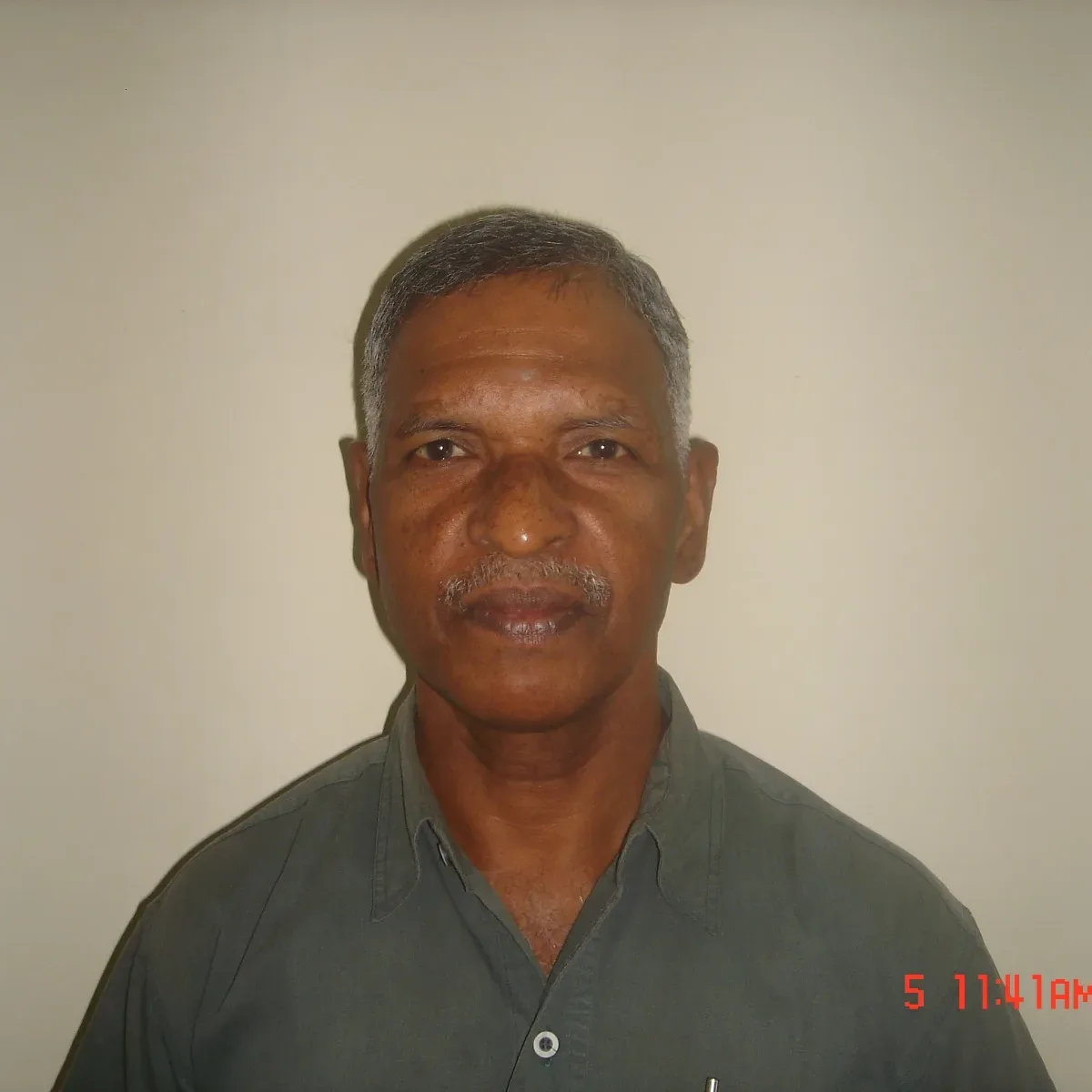
Dr. K.Mathivanan, is a 1971 batch MBBS graduate from Stanley Medical College, and he did Diploma in Public Health in Madras Medical College. He joined State Public Health Service in 1983 as Municipal Health Officer, became Deputy Director Health Services in 2004, and retired from service in 2012. He has held various posts as Municipal Health Officer, District Health Officer, Filaria Officer, RCAP Health Educator, Principal of Public Health Training Institute, Deputy Director of Health Services and Assistant Professor in Preventive and Social Medicine in Medical College during his tenure of 30 years.
He has also acquired the following degrees through Distance Education Mode – Diploma in Industrial Hygiene, Diploma in Waste Management, Diploma in Medical Law and Ethics, Bachelor in Forming Technology, M.Sc. in Varma kalai.
Even after his retirement he remains active as a mentor for serving public health officials, much of it through a WhatsApp group on Public Health Laws. This group has over 200 serving officers – Health Inspectors, Block Health Supervisors, Technical Assistants, Senior Entomologists, Assistant Directors, Municipal and Corporation Health Officers, District Health Officers, Joint Directors and Additional Director. In health systems we often talk of a community of practice. This WhatsApp group is one of the best I have witnessed. He continues to be associated with training the health officials in many districts and has been consulted in the ongoing discussions on amendments of the Public Health Act

Dr Arun Krishna, hails from Pattambi, Kerala. Has completed MBBS from JIPMER in 2021. Had worked in the NGO Tribal health initiative, Sittilingi for 1.5 years. Currently pursuing post-graduation studies in Preventive and Social Medicine in JIPMER. Interested areas – Comprehensive Primary health care, Family Medicine and Social Determinants of Health

This conversation with Dr. K. Madhivanan and the comments from Prof. T. Sundararaman is very educative in understanding the functions and the power of the Public Health Act, even for Medical professionals. The narrative was very structured and informative, highlighting the strength and gaps in the Act. I wish the suggestions of Dr. K. Madhivanan for strengthening the Public Health Act is taken forward by the concerned authorities, to make the act more effective and useful to public.
This is an important conversation. Many points are new to me. At the grassroot level, it is not always possible to say whose juristriction is important- public health official or a Local Body official.
I agree that all a digitised cersion of Act/Rules /case laws must be in the public domain for easy access. The DPH may be the right officer to do this.
I also agree with Prof TS that Right to Health is different from Public Health Act. Please take efforts to circulate this article amongst PG students as a topic to discuss. Thanks, Dr.J.Amalorpavanathan
Nice post. I learn something totally new and challenging on websites